From Special to Ordinary: Letting Go of the Raft
by
Eric Goll  Print This Article
Originally shared via video. Republished with permission.
Watch Eric’s Original Message
As parents and caregivers, we often carry deep hopes for our loved ones — independence, meaningful relationships, community belonging, and a life filled with purpose.
But over time, many of us come to a powerful realization:
What got us here may not get us where we want to go next.
The strategies, systems, and ways of thinking that helped us survive one stage of life may not be the tools that help our loved one thrive in the next.
The Raft That Saved Us
There’s a Buddhist parable that beautifully illustrates this idea.
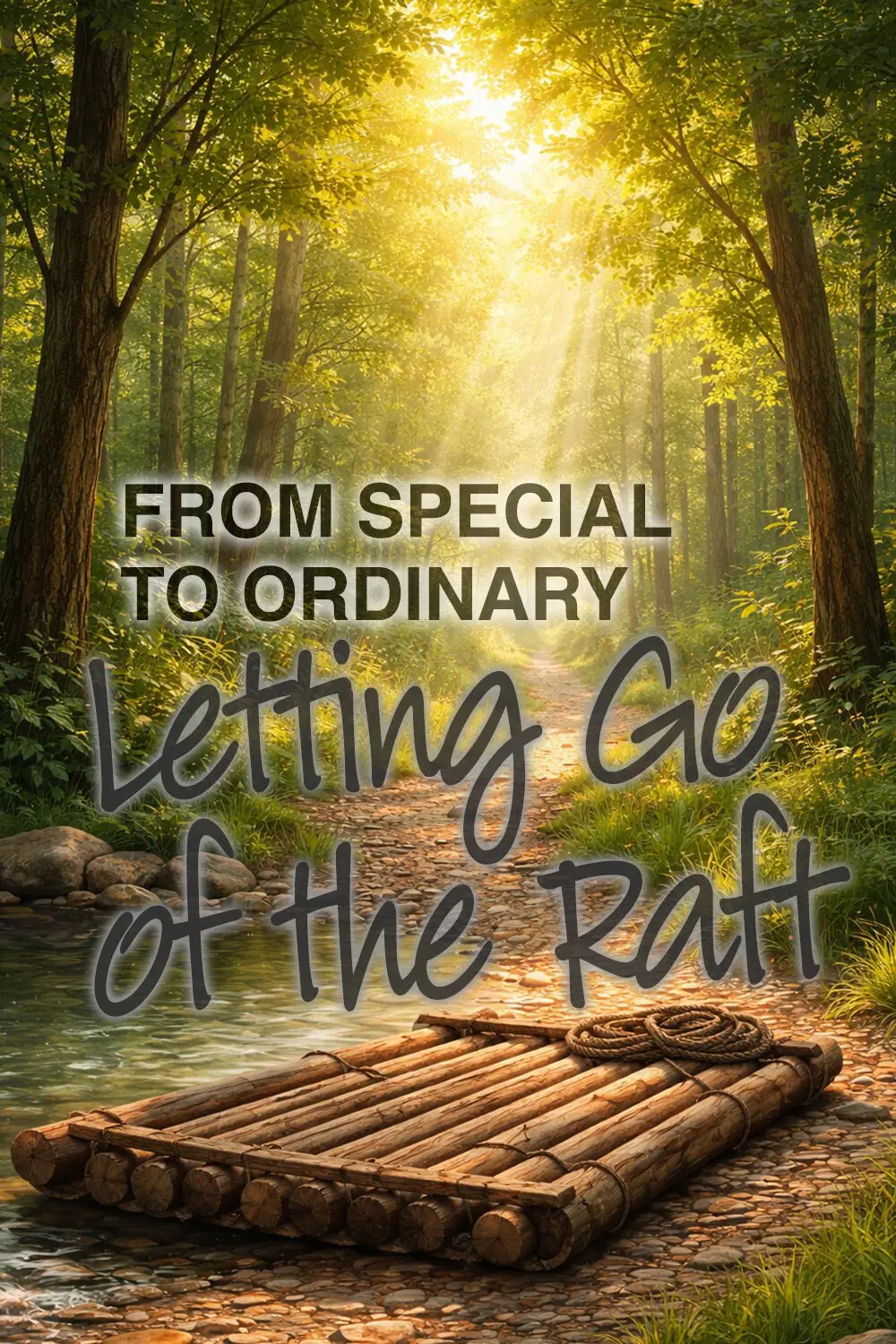
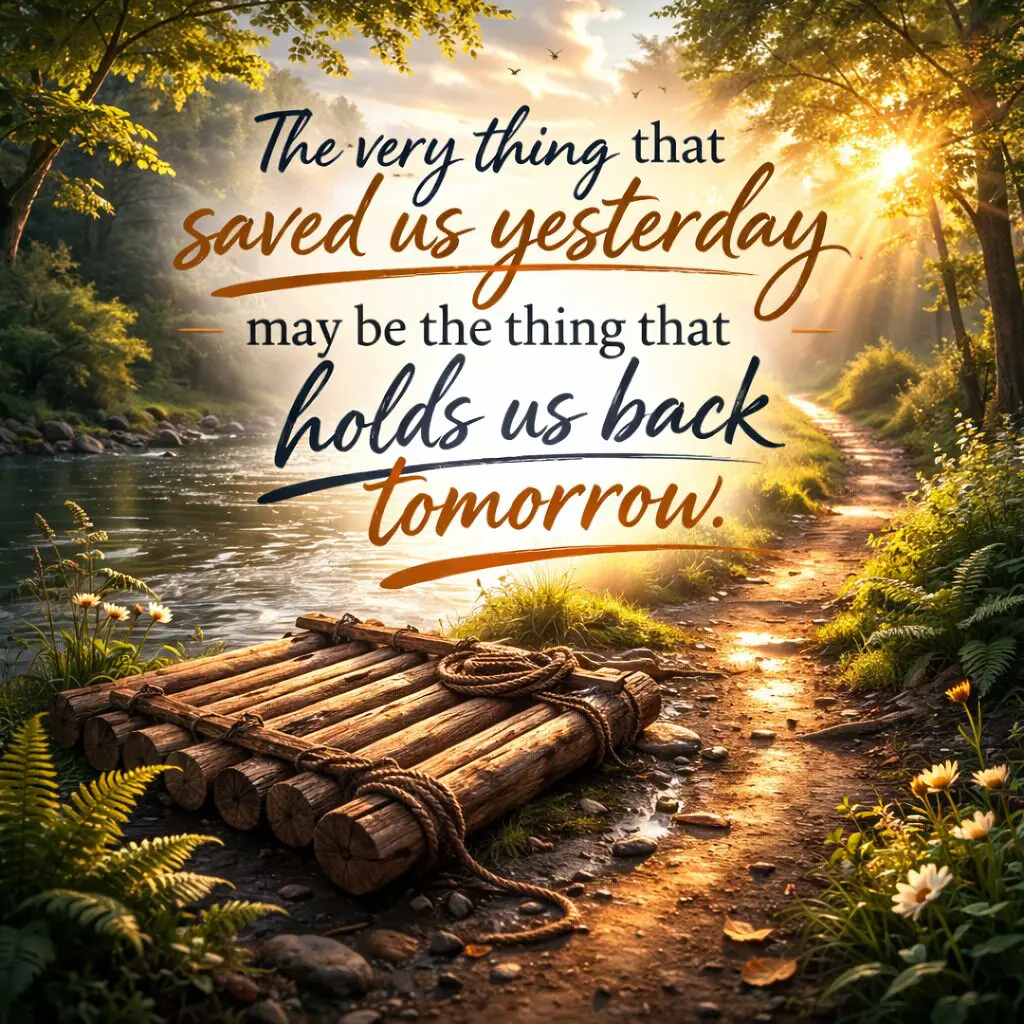
A man stands on the bank of a raging river. If he cannot get to the other side, he will not survive. He quickly builds a raft and uses it to cross safely. Grateful and relieved, he lifts the raft onto his shoulders and heads into the forest.
But as he walks, the raft crashes into trees, gets tangled in vines, and prevents him from moving forward.
The very thing that saved his life yesterday is now the thing that will stop him from living tomorrow.
To survive, he must leave the raft behind.
That raft represents the tools, mindsets, and protective strategies that were once essential — but may no longer serve us.
When the Raft Is “Special Needs Thinking”
For many families, the “raft” was the special education system.
We learned to advocate fiercely.
We fought for services.
We secured accommodations.
We protected.
We organized life around programs designed specifically for people with disabilities.
And for a season — that raft was necessary. It helped our children cross the turbulent river of childhood and school years.
But what happens when school ends?
What happens when our loved one enters adulthood?
If we continue to rely only on systems designed around segregation, protection, and disability-only spaces, we may unintentionally limit access to something greater.
The same mindset that once safeguarded our child can begin to restrict their growth.
Letting Go Without Letting Down
Letting go does not mean abandoning support.
It does not mean pretending disability doesn’t exist.
It does not mean removing accommodations.
It means shifting our thinking.
Instead of asking:
- “What special program can they join?”
We begin asking:
- “Where do typical adults spend their time?”
- “What ordinary places could my loved one belong?”
- “How can we build relationships beyond disability-only circles?”
- “What would an awesome ordinary life look like?”
The Forest of the Adult World
The adult world can feel like that dense forest in the parable.
It’s not always designed with disability in mind.
It can feel unfamiliar.
It may stretch us beyond what feels comfortable.
But it is also full of:
- Community
- Contribution
- Real relationships
- Meaningful work
- Shared experiences
If we walk into that forest still carrying outdated thinking, we can get stuck.
If we loosen our grip — even slightly — new possibilities begin to appear.
Ordinary Is Powerful
An “ordinary” life does not mean a small life.
It means:
- Going to the same gym as everyone else
- Having coworkers without disabilities
- Joining community clubs
- Developing friendships based on shared interests
- Being known for personality and passions — not diagnosis
Ordinary creates belonging.
And belonging changes everything.
A Small Step Forward
You don’t have to drop the raft all at once.
But you can begin by asking:
- What is one mindset I might be holding onto?
- What is one small shift toward ordinary we could try?
- Where might my loved one experience greater belonging?
Small steps matter.
Because what got us here has served us well.
But growth sometimes requires letting go — so we can move forward.
Planning for What’s Next
If this reflection has you thinking about the future, our PSN 15-Minute Guide: Future Planning offers a calm and structured starting point for families ready to take the next step.
Watch Eric’s Original Message
To hear Eric share this powerful metaphor in his own words, watch his original video here
If you want to learn more about creating an “Awesome Ordinary” life, visit https://www.empoweringability.org/
More From the Author
- Empowering Ability
- Life Plans: Can you envision your loved one’s future?
- Tip to Grow Your Loved Ones’ Independence
- 3 Steps To Make Progress This Year
You May Also Like
- Identifying Goals
- How to Find Your Special Child’s Spark?
- How to Set Clear Goals and Plan Naturally
- Embracing Your Child’s Best Ways of Learning 12 Different Ways to Learn
This post originally appeared on our January/February 2022 Magazine Updated with permission, 2026