Feel Seen and Supported: How Sunflower Lanyards Help Families on the Go
by
PSN Team  Print This Article

Traveling with a child who has a disability that you can’t always see can be overwhelming, but one simple symbol is changing that.
The Sunflower Lanyard helps families discreetly communicate their need for extra time, space, or support, making everyday outings and travel more inclusive and less stressful.
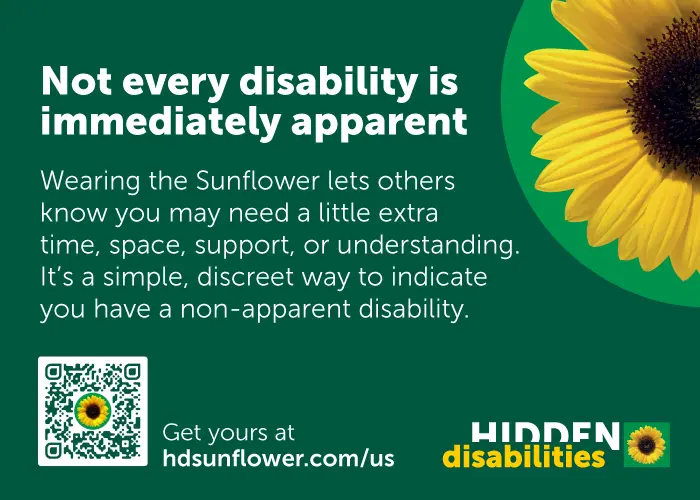
Real-Life Impact: Tiffany Brown’s Success Story
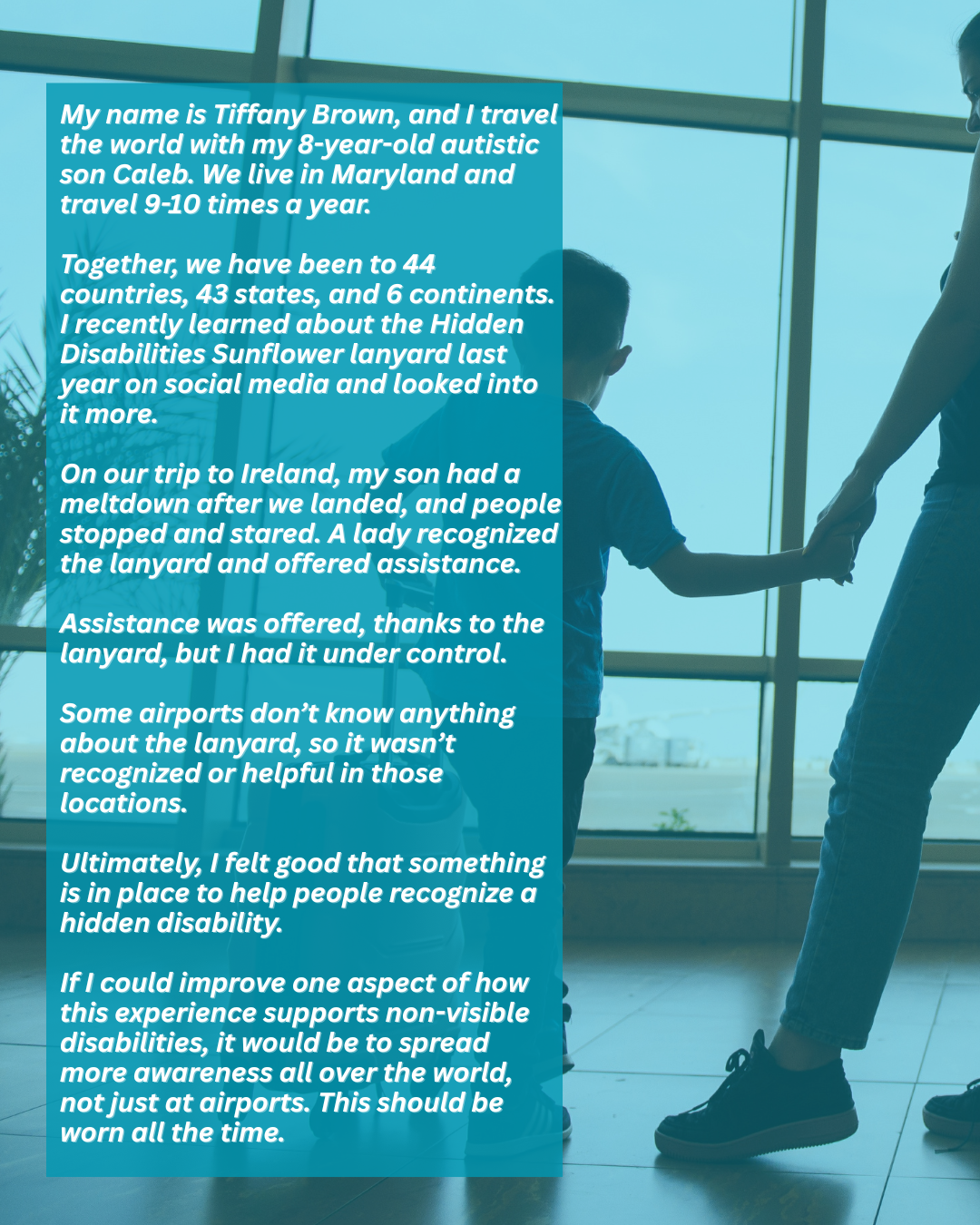
Why the Sunflower Matters
Stories like Tiffany’s are exactly why the Sunflower program exists and why it’s expanding worldwide, including across the United States.
Feel Seen and Supported: How Sunflower Lanyards Help Families on the Go
Lynn Smith is the Regional Director for Hidden Disabilities Sunflower in the United States. Since 2020, she’s been dedicated to raising awareness about non-apparent disabilities and helping to remove the barriers individuals with them face every day.
She aims to make the Sunflower a nationally recognized symbol for non-apparent disabilities across the US while increasing awareness, understanding, and acceptance.
As organizations nationwide become members of the Sunflower program, Lynn guides them through meaningful and impactful adoption of the program, ensuring it’s not just a symbol, but part of a broader culture of disability inclusion.
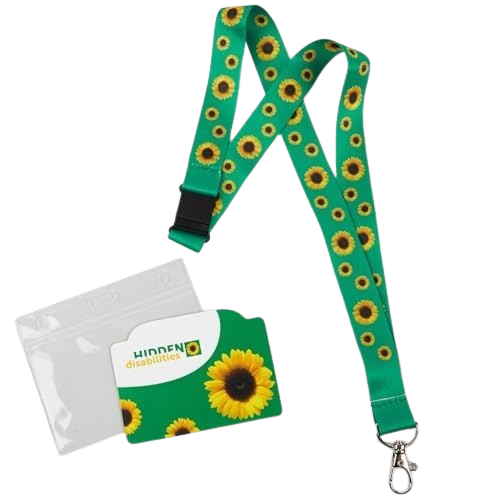
What Is The Sunflower And How Did It Get Started?
The Sunflower is an internationally recognized symbol that allows individuals with non-apparent disabilities to discreetly and voluntarily indicate they may need additional time, space, support, or understanding. It is a green lanyard decorated with bright sunflowers.
The idea originated in 2016 at Gatwick Airport in England. The Gatwick team and the Airport Passenger Advisory Group wanted to find a simple but effective way to support passengers with non-apparent disabilities.
With insight from people with lived experience and local and national charities, the concept of a sunflower-patterned lanyard on a green background was developed. This symbolizes confidence, growth, strength, and positivity.
Since that first step, the Sunflower has grown into a global movement, with thousands of organizations from every sector joining the Sunflower network.
Organizations range from retail to travel and tourism to transport, including over 330 airports, railway networks, coach and bus services, and ferries.
Many educational institutions (universities, schools, and colleges), healthcare, central and local government agencies, football teams, theme parks, theatres, and financial services are also involved.
By wearing the Sunflower, individuals with non-apparent disabilities can feel more empowered, and organizations can create more inclusive, compassionate spaces for everyone.
How Do Parents Learn About The Sunflower?
Many parents first hear about the Sunflower through Sunflower-friendly organizations, such as airports, theme parks, or public spaces that support Sunflower wearers.
Once introduced, parents visit the HD Sunflower website or connect with one of the member organizations to learn more. Here, they can:
- Understand the meaning and purpose of the Sunflower
- Order Sunflower lanyards, cards, or accessories for their child or family
- Find businesses and venues that have joined the Sunflower program
For many families, the goal is simple: making day-to-day outings easier and more inclusive. The Sunflower provides a discreet, nonverbal way to signal that someone may need a little extra time, space, or understanding, and that small symbol can make a big difference.
How Do Parents Know To Ask For Support In Airports?
Parents traveling with a child with a non-apparent disability often wonder how to access support at the airport. The good news is that over 330 airports and 22 airlines globally recognize the Hidden Disabilities Sunflower.
Here’s how parents can request help:
1. Airport websites:
Many Sunflower-friendly airports list the Sunflower under their Accessibility or Special Assistance pages. You’ll often find:
- Information on where to pick up a lanyard
- Services available for those with non-apparent disabilities
2. On-site at the airport:
Look for Sunflower signs at:
- Information desks
- Check-in counters
- Security checkpoints
Airport staff trained in the program will recognize the Sunflower lanyard and offer appropriate assistance. The availability and pickup locations for Sunflower lanyards vary by airport. (see link in #4 below)
3. Airlines & travel professionals:
Some families learn about the Sunflower program when booking through:
- Airlines
- Travel agents
- Customer service or accessibility support teams
4. The official Sunflower website:
You can view a global list of participating airports and airlines here:
Airports Around the World – Hidden Disabilities Sunflower
Real-Life Impact: Orlando International Airport Success Story
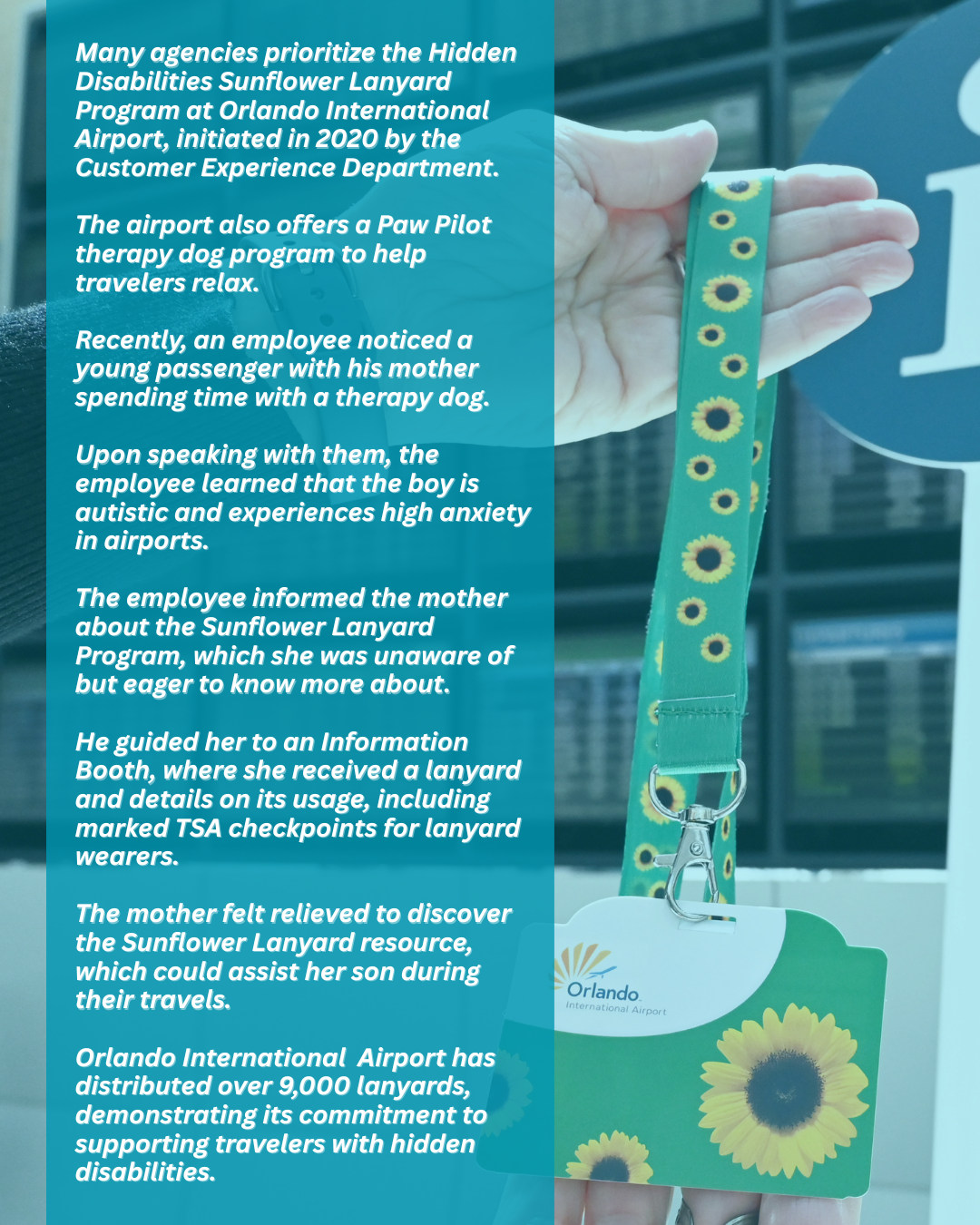
Are The Items At The Airport Free?
The Sunflower is free at participating airports. There is no need for someone to show medical documentation or explain their condition. The lanyard is theirs to keep and can be used at any Sunflower-recognizing location globally.
Participating airports typically offer items designed to help individuals with non-apparent disabilities travel more easily and comfortably. These items are part of the Sunflower program and are available at many airports worldwide.
Items commonly offered:
- Sunflower lanyards: The most recognized item, worn around the neck to signal that the wearer has a non-apparent disability and may need extra time, patience, or assistance.
- Sunflower ID cards: Sometimes included with lanyards, the wearer can write a short message, such as specific support needs or emergency contact info.
- Sunflower pins or wristbands: Some airports and venues offer alternative or additional items to wear based on comfort or preference.
- Informational flyers or guides: These explain what the Sunflower means and how to use it effectively when traveling.
Are They Specific Disorders/Diseases Or General Ones?
The Sunflower program is intentionally inclusive. It’s designed for any non-apparent disability, regardless of diagnosis or condition. You don’t need to disclose a medical diagnosis to receive or use a lanyard.
Can I Buy Items To Fit Specific Needs?
If you want personalized items that cater to specific needs, the Sunflower offers a range of customizable cards through its official online shop.
Personalized ID cards:
The Sunflower provides personalized ID cards that allow individuals to discreetly communicate the type of assistance they may require. These cards can be customized with:
- Your photo and name
- Up to five icons: Representing specific types of support you might need, such as assistance with communication, mobility, or time. View Specific Icons
- Emergency contact information: Providing a point of contact if needed
Wristbands and pin badges are also available for those who prefer not to wear lanyards.
What If My Airport Doesn’t Offer The Sunflower?
If you’re traveling through an airport that does not yet participate in the Sunflower program, you can still take steps to help make your journey smoother and advocate for more inclusive travel:
1. Wear your Sunflower lanyard or Sunflower personalized card anyway:
Even if the airport isn’t officially part of the program, wearing your lanyard can still help signal that you or your child may need extra time, patience, or support.
Many airline and airport staff recognize the symbol even in places where it isn’t formally adopted.
2. You can help bring the Sunflower to more locations by:
- Reaching out to the airport’s customer service or accessibility department
- Sharing your travel experience and explaining how the Sunflower would improve accessibility
- Encouraging others to do the same, especially through online reviews, social media, or disability advocacy networks
Even if your airport hasn’t joined the global Sunflower network yet, your voice can help make the case for change and ensure more inclusive, supportive travel for everyone with a non-apparent disability.

Helpful Articles
- The World Needs All Kinds of Minds: Why This Mindset Helped Create a Company Like No Other
- Talking with Supported Entrepreneur Tina Bagon (with Sarah Shaw)
- Let’s Go Fitness Co-founded by Father and Son with (Prader-Willi)
- Person-Ventured Entrepreneurship: What Do You Know About Entrepreneurship
- iCan Shine Bike Camp Teaches Individuals to Ride a Two-Wheel Bicycle
- Where to Go if Your Child Needs a Job or Help with Post High School Education
- Parenting Your Young Adult Through Their First Employment Experiences
- What Employers Can Do for Employees Whose Children Have Special Needs
- Peaceful Fruits: Paving The Way for Socially Good Partnerships
- Why Volunteerism Matters for Individuals with Special Needs!
- Indulge with a Chocolate Charcuterie Board (Cameron’s Chocolates)
- “If I Need Help” Offers Creative Low Tech Solution for Those Who Wander
- How to Find Your Special Child’s Spark?
This post originally appeared on our May/June 2025 Magazine