DROWNING IN PAPERWORK? How to Organize Your Child’s Paperwork With a System That Sticks
by
Erin Croyle  Print This Article

The paperwork that comes with parenting a child with complex needs can feel endless and overwhelming. This article offers real-world strategies from parents who’ve been there — showing how simple, flexible systems can help you stay organized without striving for perfection.
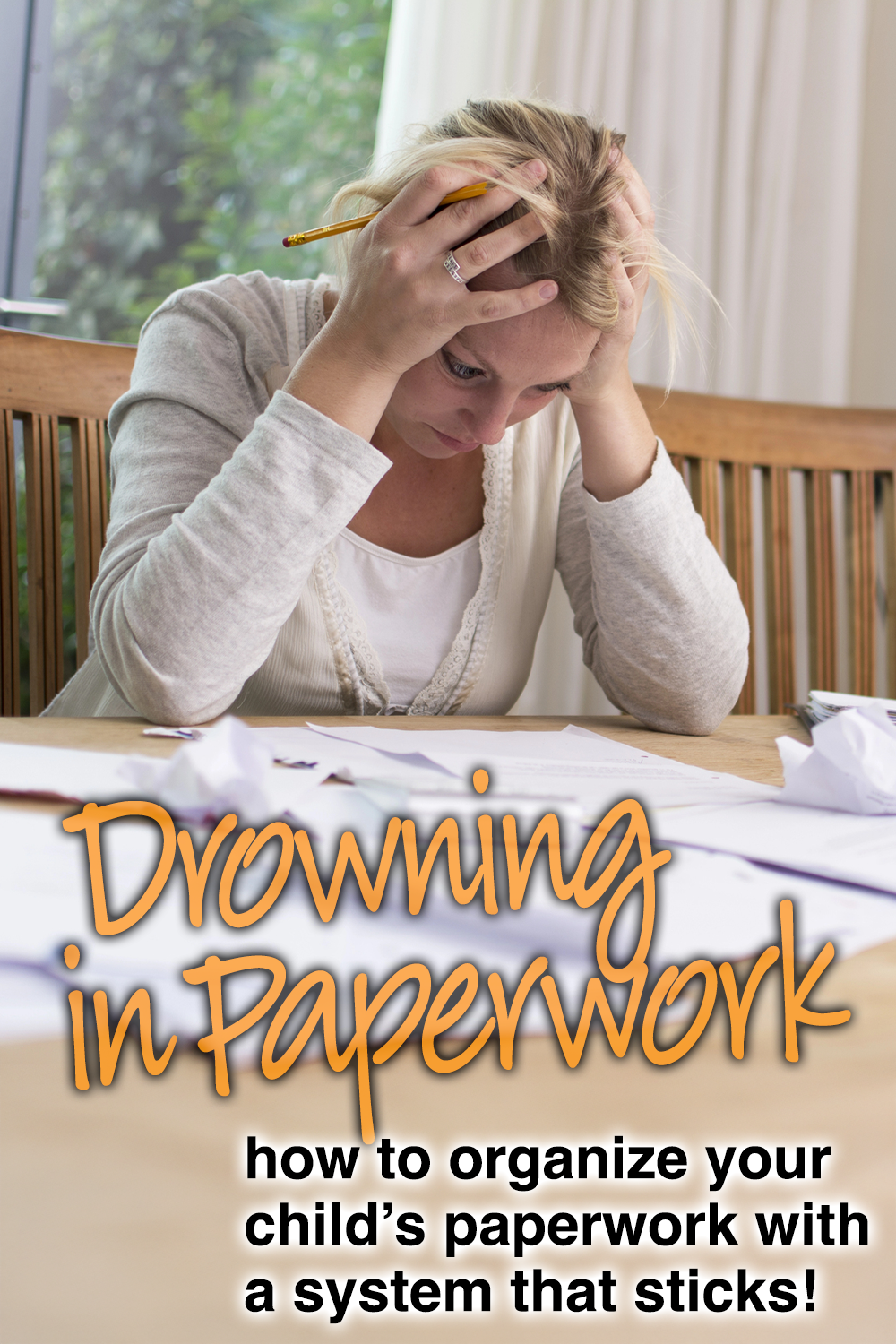
Parenting is some of the hardest — and most rewarding — work we’ll ever do. While sleepless nights, endless worrying, and expenses are common knowledge, the administrative duties are an endless, thankless job that barely gets mentioned.
For parents and caregivers of children with complex medical and support needs, the planning and paperwork requirements are next level.
This sort of thing sneaks up on you. It might start with a prenatal diagnosis or a NICU stay. Then early intervention enters the picture. The papers and emails begin piling up. We’re so busy trying to stay afloat that we set it aside with a makeshift system, figuring we’ll get to it someday.
Suddenly your child turns 10 — and you’re drowning in physical and virtual paperwork.
We know we’re supposed to keep all the things. We’re told to document everything, keep it in writing, save it in an email. But then what?
I reached out to a wide network of parents — many of whom are also professionals in the disability field — to gather their tips and tried-and-true systems.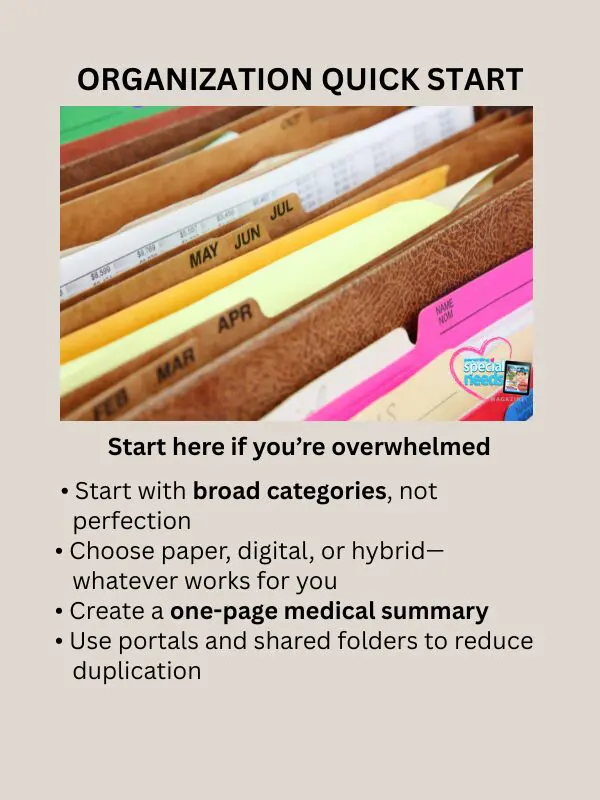
FILE FOLDERS
It may seem old school, but this tried-and-true method came up again and again. Filing systems range from full-size cabinets to portable accordion-style portfolios. Folders can be labeled based on your unique needs.
For example, names could include: Immediate, Mom – Medical, Jane – Medical, Jane – IEP, John – Medical, John – Legal, Special Needs Trust, Taxes, Dog, Miscellaneous, and so on. You can even break it down further: therapy, durable medical supplies, lab results, vision, hearing — or whatever categories warrant their own space.
Don’t strive for perfection with this. Think of it as a way to corral information you might need one day. And chances are, you will.
I’ve relied on a catch-all file system for my now 15-year-old son with complex medical needs. Recently, I had to scan 60 pages of medical records from his toddler years to send to a new team of specialists. Everything I needed was right there in my desk file drawer — in his bulging, overflowing medical folder.
BINDERS FULL OF WISDOM
Binders may feel like another throwback to a bygone era, but they were another popular option among the parents I surveyed.
One mother of three, including a neurodivergent child with complex medical needs, shared:
“We have a very large three-ring binder with dividers for each specialty. We print out summary visits, labs, test results, and images. We might review it before an office visit and bring it with us for hospitalizations. But it isn’t something we typically carry around.”
Another parent shared that she’s used binders for every stage of her children’s lives — from early intervention to preschool, elementary, middle, high school, and now college.
“The binders were divided into sections for IEPs, report cards, IEP progress reports, evaluations, and medical information that might be important to refer to for educational needs. The medical tab would get moved to the current binder that correlated with their age. Now I have one for each of them for college as well — including evaluations, employment plans, college applications, acceptance letters, degree details, and accommodation information.”
Additional binders can be used for Social Security, Medicaid waivers, and medical needs. Filing documents in chronological order with tabs or dividers makes finding what you need far easier. While it might seem like a lot of work, it’s actually a simple system to maintain once it’s set up.
Preparing for an upcoming IEP meeting? Download our free Pre-IEP Worksheet to get organized and feel more prepared before you walk into the room.
CREATE A ONE-PAGER
A one-pager listing medications, diagnoses, and key medical information is essential for any child who sees doctors regularly.
While many of us can recite this information by heart, it’s much easier to hand the intake person a sheet that lists everything clearly. It’s also invaluable if someone else is taking your child to an appointment — or in an emergency situation.
DOING IT DIGITAL
This is a lot of paper talk in a digital age — but thankfully, creating digital folders is easier than ever.
The same concepts used for file folders and binders can be implemented on Google Drive or other secure platforms. Create folders and upload documents as needed. Use your phone’s camera to scan paper documents directly into your digital files. These folders can be shared easily, granting access based on what feels appropriate.
I find Google Drive especially helpful for my child’s school team. Since visuals are important, I upload photos and grant editing access to his teacher, teaching assistant, speech-language pathologist, and others. When team members change, I update access. This helps them fully utilize his communication device, complete school work involving personal stories, and engage with peers.
Digital folders also make it easier to share important information — such as powers of attorney, letters of intent, financial documents, and key paperwork — with members of your child’s circle of support. These tools are game changers for supported decision-making and future planning if something happens to a primary caregiver.
EMBRACE THE POWER OF THE PORTALS
Medical portals may be one of the greatest tools available to families like ours.
Complex medical needs require a level of communication with doctors and specialists that most people can’t imagine. Take time to explore each portal and connect systems when possible.
Patient portals allow messaging with doctors, medication refill requests, uploading documents, and receiving signed paperwork — without driving to an office. You can ask questions, request refills, and authorize institutions to share files with just a few clicks.
Authorizing and fully utilizing patient portals can save time, energy, and money by allowing communication between visits.
KEEPING IT REAL ABOUT ARTIFICIAL INTELLIGENCE
AI can be a powerful tool — but it must be used wisely.
When using AI, clear “Do” and “Don’t” boundaries are helpful:
DO:
• Use AI for note-taking during medical appointments or IEP meetings (with permission).
• Use AI to summarize documents. Prompts like “Organize the following medical records in chronological order” can save time.
• Use AI to edit drafts of emails or documents — while reviewing carefully for accuracy.
DON’T:
• Rely on AI for medical diagnoses or legal advice.
• Accept information without verifying it. Always consult trusted medical and legal professionals when needed.
FOCUS ON PROGRESS, NOT PERFECTION
As one professional who is also a parent shared:
“It can all be a lot to put into a system, but once you have it down, it’s much easier to keep up with and especially easy to find things. The hardest part is getting other family members to remember that it’s all there.”
Sometimes the system isn’t the hardest part — remembering to use it is.
HELPFUL HACKS
One parent created a dedicated email address just for medical portals.
“All reminders and messages come through a designated address that we can both access — and it’s for medical purposes only.”
Another parent created an email address in their child’s name (which they manage) as a workaround for portal proxy requirements when their adult child requires total care.
A password management system is also essential when juggling multiple portals and accounts. Digital password managers are helpful, but for those who prefer paper, password books can be effective. Pro tip: writing in pencil makes updating passwords easier.
LETTER OF INTENT
Primary caregivers hold an incredible amount of information — in their phones, laptops, files, and minds.
Writing a letter of intent and updating it regularly is one of the most important steps you can take. A common fear among caregivers is: What happens to my child if something happens to me?
While your love and care are irreplaceable, putting everything in writing creates clarity and protection.
Include medical details, legal documents, portal access information, and financial information. But also include the everyday details: likes, dislikes, comfort items, routines, traditions, and the small things that bring joy.
Organization isn’t about perfection. It’s about peace of mind. And peace of mind changes everything.
About the Author
Erin Croyle is a journalist who has worked for National Geographic and Al Jazeera English. She was working in Malaysia when her first child, Arlo, was born in 2010. His diagnosis of Down syndrome transformed her career – shifting her focus to disability rights and advocacy. She’s currently the communications coordinator at Cornell University’s ACT for Youth, a communications specialist with the Center for Family Involvement at VCU’s Partnership for People with Disabilities, and the creator and host of the podcast The Odyssey: Parenting. Caregiving. Disability.