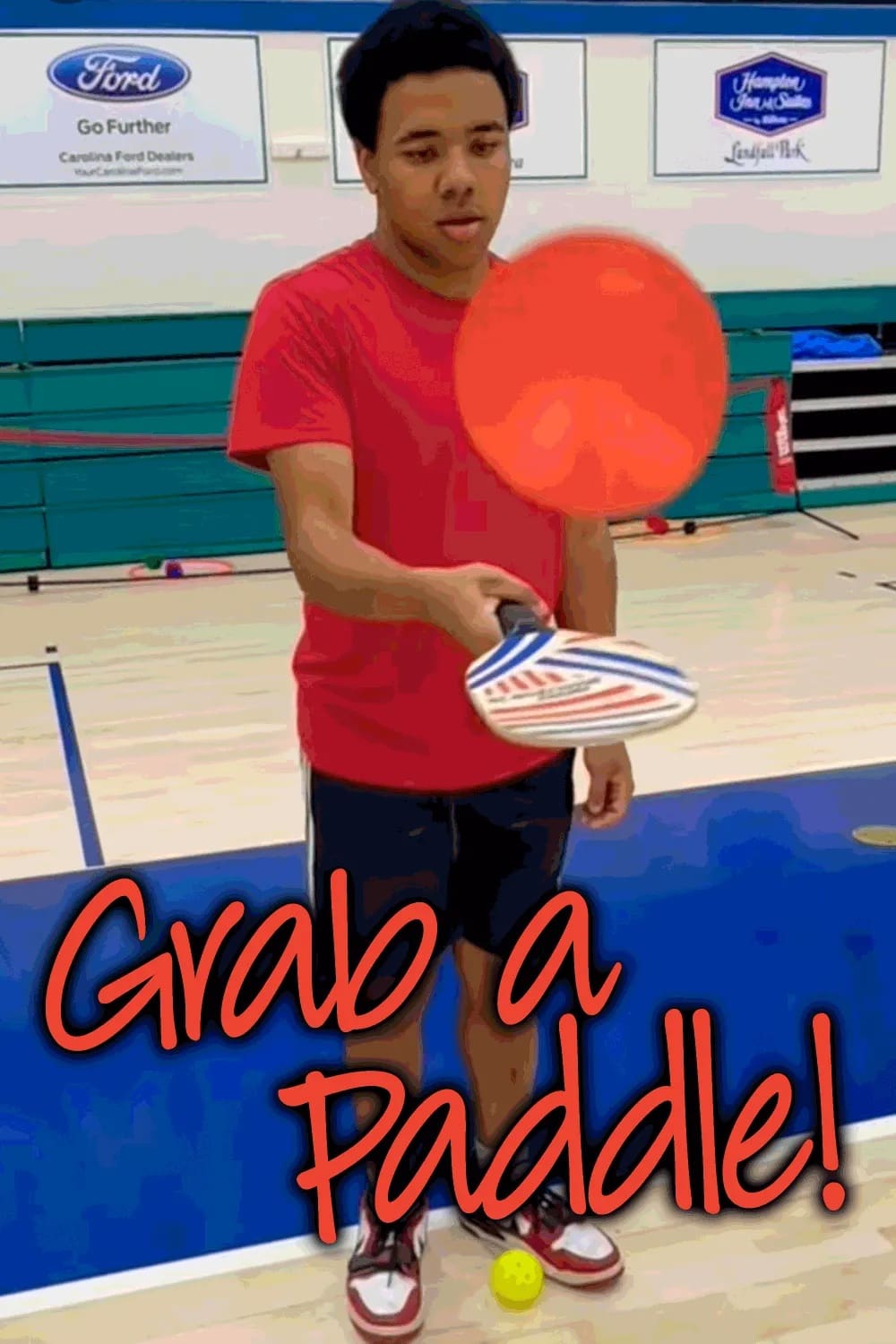
Grab a Paddle! Beginner Pickleball Skills for Players of All Abilities
by
Jordan Weber Fitness  Print This Article
Lesson 1: Beginner Pickleball Skills
Introduction: Kids can learn the fundamental pickelball skills like grip strength, serving, forehand striking and backhand striking at home with limited equipment. Kids will also develop their hand eye coordination, agility, balance and reaction time. These three drills work indoors and scale for every level.
Skill 1 — Pancake Flipping
(Equipment needs: pickleball racket, small rubber disc/ paper plate or bean bag)
Directions: With your racket, flip a polyspot as shown, a bean bag, a favorite toy, or a paper/cardboard plate.
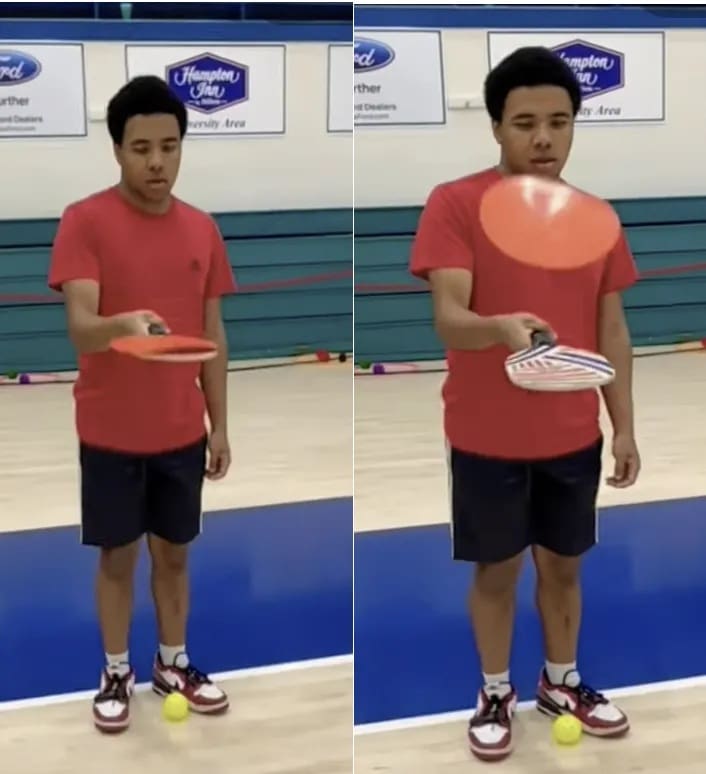
Step 1- While stationary, flip and catch the pancake 5x
Step 2- While stationary, double flip and catch the pancake 5x
Step 3- While stationary, triple flip and catch the pancake 5x.
Step 4- Walk forward, flip and catch the pancake 5x
Cues: “Grip it like you’re reeling in a shark’” “Flip w/ wrist.”
Challenges:
-> How many flips in 10, 20 and 30 seconds?
-> Race to 10 flips, 20 flips, 30 flips first.
Skill 2 — Swipe the Ghost
(Equipment needs: pickleball racket, scarf / plastic bag, tissue or paper towel square)
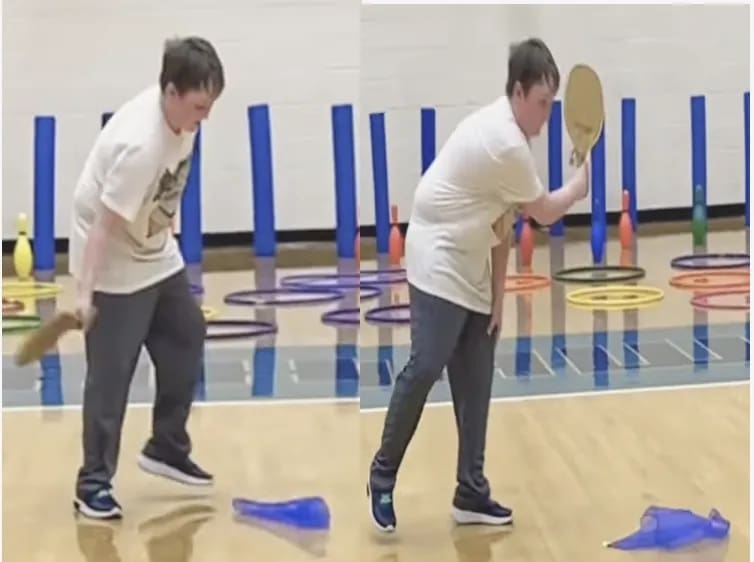
Directions: Swipe a plastic bag or scarf along the ground using the paddle for as many feet as desired marked by two cones 10-20ft apart.
Cues:
“Swing low, brush the ground’
“Follow through forward, not up”
Challenges:
-> Race a partner to the finish line
-> Use a scarf for extra visual feedback
Skill 3– Red Light Green Light Game
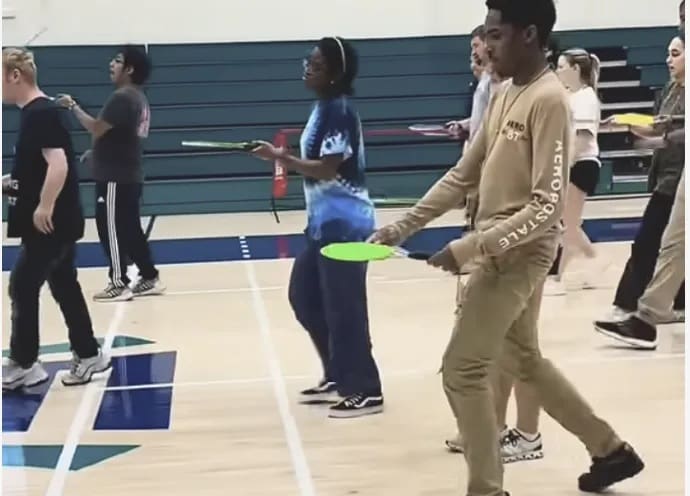
Directions: Balance a pickleball or “pancake” on the paddle and move forward when the coach says “green light.” When the coach says “yellow light,” flip the pancake or juggle the ball. When coach says “red light,” stop! Continue for 20 yards then go the other way. Independent or cooperative game play.
Progressions:
-> Red light= squat and balance while flipping
-> Yellow light= side shuffle will flipping
-> Green light= skip or run while flipping
-> Use a whiffle ball to progress even more
Coaches Insight: Grip is the foundation. Before any swing cue, make sure the player has a firm, confident hold on the paddle. The wrist actions in all three drills directly mirror the forehand and backhand mechanics of real pickleball. Attainable, fun, repeatable and continuous repetitions curate success and enthusiasm for sport.
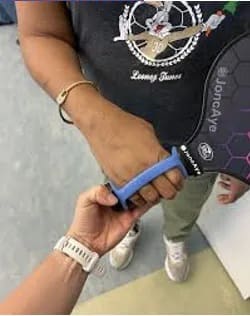
Adapt it: For independent high-rep practice, tie a balloon or soft ball to a string attached to the paddle handle — the ball returns after every hit. For players with limited hand function, look for silicone cuffs, or something similar.
Parent Coaching Tip: Find items in the house the child would like to use as an object to balance, i.e., a toy they prefer, or a balloon they can draw on before they begin. Some stuffed animals will provide alertness and fun.
For Coaches and Teachers: Pancake flipping will assess the learned ability to hold a racket while he swipe the ghost exercise will assess underhand swinging mechanics essential for underhand serving. The balloon activity will assess the learners ability to coordinate both locomotor and object control skills.
Encouragement for Parents: Count each rep and applaud each effort with enthusiasm. Demonstrate and be prepared before you begin the lesson. Reach out to me at weberj@uncw.edu if you have questions about beginning. You are not alone.
Try this Game: 4-SQUARE-BALOON: 4 squares marked with rope or tape 5ft by ft. Use big cones and a rope around the top for net height. Stike the balloon with the paddle into another player’s square. Land it in the square for a point. Play to 10. Progress with whiffle ball.
About Our Expert
Jordan Aaron
Weber Assistant Professor – Healthful Living and Fitness Education
Dr. Jordan Aaron Weber is an Associate Professor of Healthful Living and Fitness Education at UNC Wilmington, with over 20 years of experience in physical education and adapted activity. He is passionate about helping individuals build lifelong movement skills that support both physical and emotional well-being.