
The allure of sipping on an adult beverage at the end of a hard day is real, and for good reason.
A glass of wine or a stiff drink are long romanticized ways to relax and unwind—a sort of E-ZPass into the fast lane to relaxation.
But what happens when nearly every day is hard? Kind of like the unending mental and physical labor that comes with being both the parent and primary caregiver for your child.
Reaching for a bottle of booze may seem like simplified self-care [1] when your days are often both incredibly demanding AND mundane.
While there is virtually no research [2] on the connection between caregiving and problem drinking, there is recognition that caregiver burden [3] can cause anxiety, depression, social isolation, and stress, which are predictors of increased alcohol use.
The slope to addiction is a slippery one. “It’s 5 o’clock somewhere” loses its charm when it becomes an excuse instead of a rare occasion. But it’s easy to miss the signs when you’re having fun on the slide.
I Speak From Experience
I remember the warm, fuzzy calm that came over me when I had my very first drink many moons ago.
It’s a feeling I chased over and over again at countless venues—dorms, dates, happy hours, concerts, weddings, funerals, brunches, lunches, dinners, suppers, baby showers, and eventually, play dates.
The way our culture normalizes alcohol use made it easy for me to “enjoy” a glass (or three) of wine while making dinner for my children up until I quietly quit drinking when they were ages 5, 3, and 1. Mommy happy hours at a playground are a thing.
One that I partook in and enjoyed. I felt like I deserved it.
My oldest has Down syndrome and has eloped [4] since he could walk. I know now that all three of my children have ADHD, and so do I.
What felt like the only attainable self-care I could find at the time, was actually me self-medicating [5] with some really strong dosing.
Caregivers operate at a whole other level of intensity than peers who are just parents.
When there is literally no time in the day “just to be,” taking the edge off with a drink can be dangerously appealing.
In fact, a 2023 survey of 1600 mothers by Parents [6] found that 48% had tried to curb their drinking, one in three admitted they might be drinking too much, and 12% were worried they might have a dependency problem.
Everything in Moderation is not always the way
Sober, curious movements abound these days. From themed months like Dry January and Sober October to expensive mocktails popping up in beverage sections at the grocery store—it’s easier than ever to be a teetotaler.
Staying sober, however, is a whole other story. Drinking is ingrained in our lifestyles—mimosas at brunch, celebratory toasts, honorary toasts. When I first stopped drinking, the pressure to “have just one” came from virtually every adult around me.
Nearly a decade later, I still rehearse responses about why I’m abstaining. It’s just assumed that everyone old enough to drink would drink. And if they’re not drinking, they’re expected to explain why, as if it’s anyone’s business!
If moderation requires thought or effort, it might be time to examine your habits more closely. The idea that a glass of red with dinner every night is healthy is a complete fallacy.
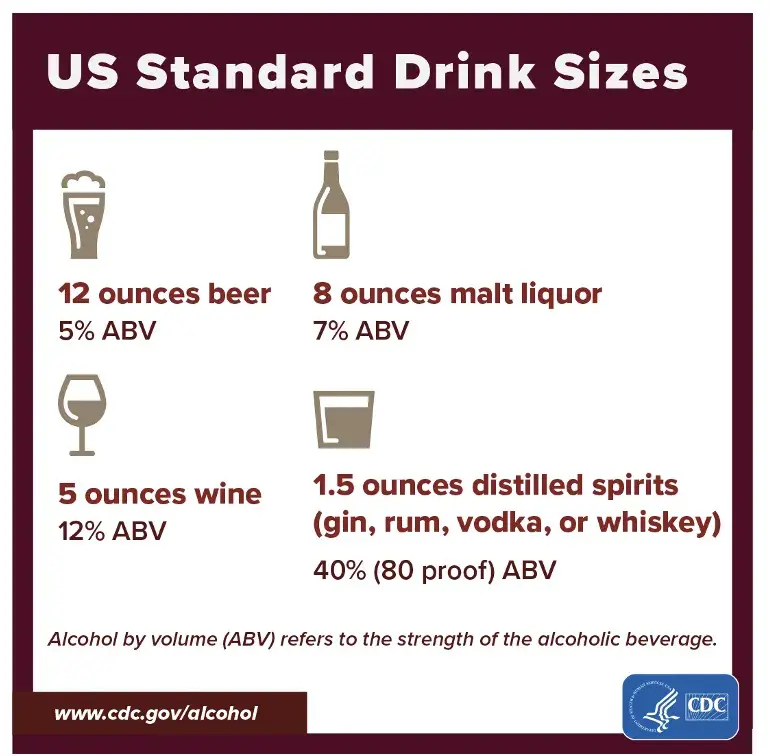
First off, how much of your drink is in that drink? A serving size of wine is 5 ounces [7]. That is WAY smaller than most people’s pours.
 [8]
[8]
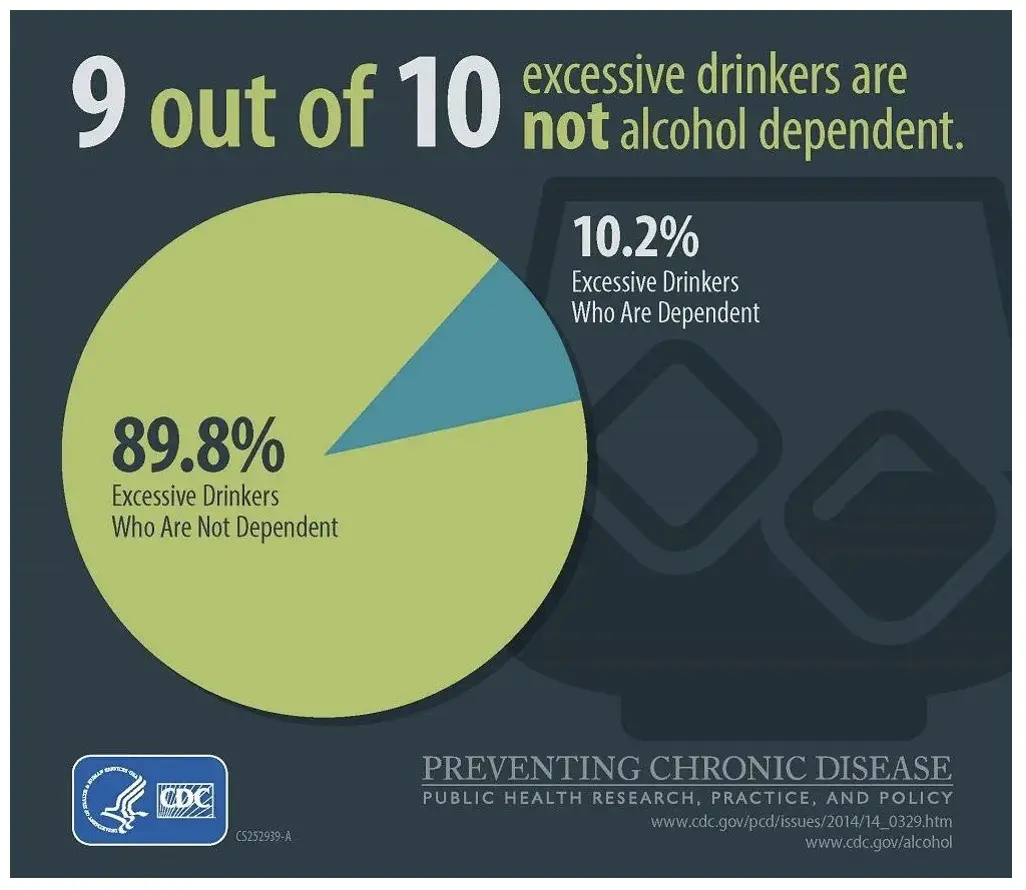
Another consideration is that many people who drink too much don’t realize they’re drinking in excess. And they certainly don’t see themselves as dependent on alcohol.
Furthermore, statistics on alcohol consumption are self-reported. If we were to factor in human error and perception, most people would probably both over-serve themselves while simultaneously under-reporting their consumption to medical professionals.
 [9]
[9]
Even if you truly are one of those people who can have a few sips and walk away, the adage that alcohol in moderation is GOOD for us is patently false.
For decades, we’ve been led to believe that a drink or two, several days a week, could help in preventing heart attacks and strokes.
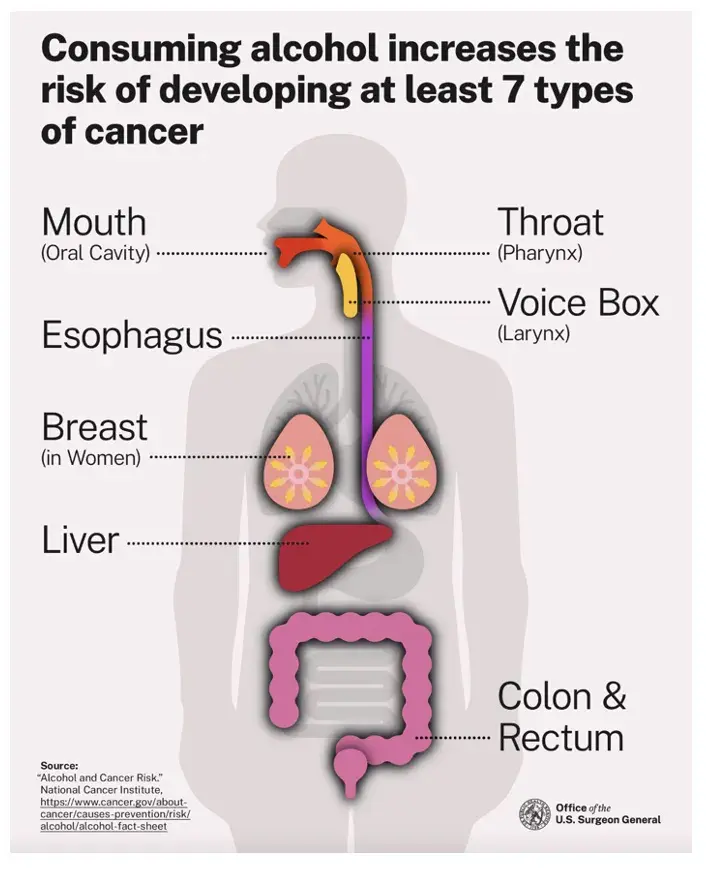
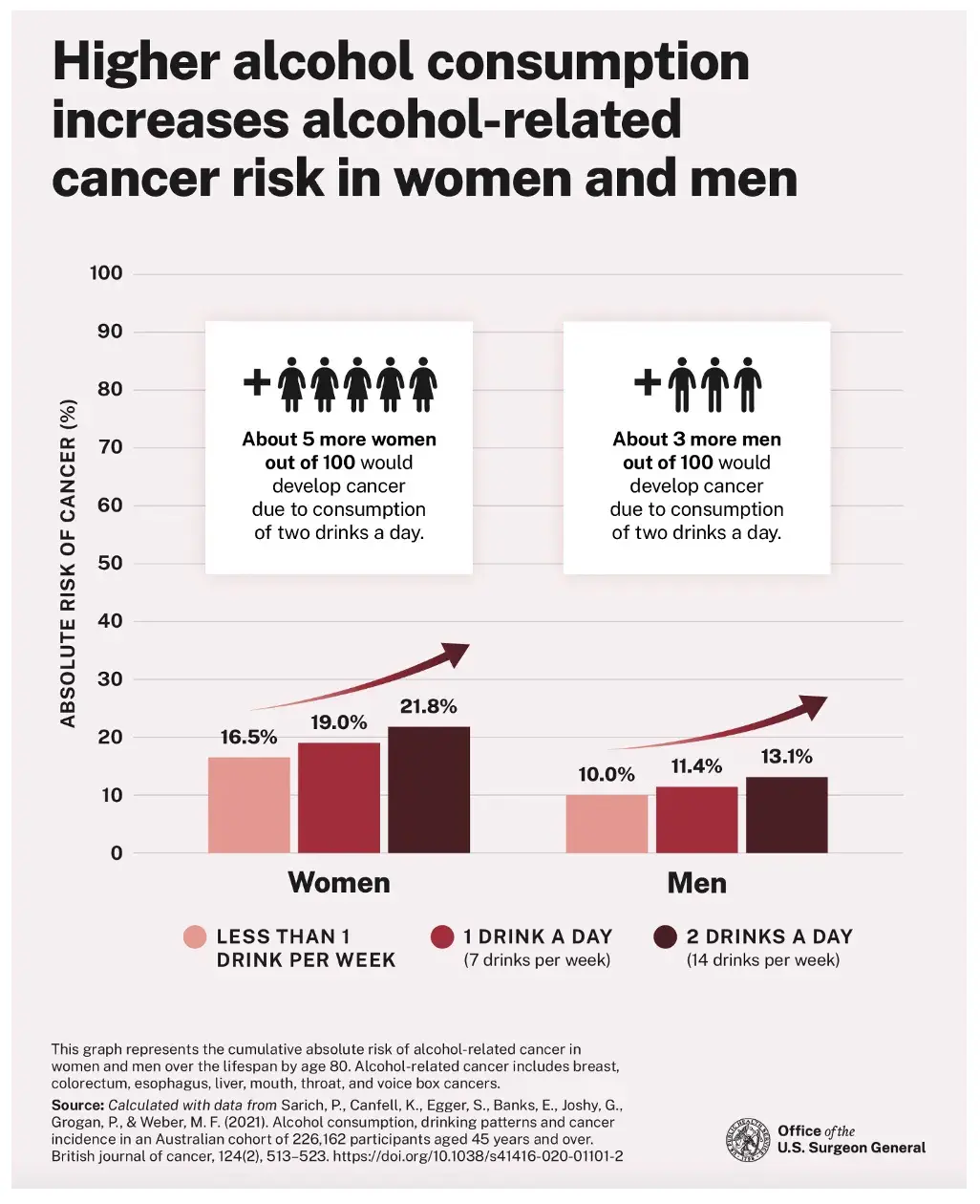
But in early 2025, the current U.S. Surgeon General, Dr. Vivek Murthy, urged warning labels [10] to be updated to include a heightened risk of at least seven different types of cancers, including breast, throat, and colon.
 [11]
[11]
According to his report [12], even consuming just one drink per week increases cancer risk by 10% in men and 16% in women.
 [13]
[13]
Why Alcohol is so Risky for Caregivers
For those of us navigating this often isolating and relentless life of caregiving, alcohol often serves as a welcome distraction [14] from what we really need—respite, support, empathy, and space to be seen.
It muddies our crystal clear view of the injustice our children face, offering relief from a sometimes brutal reality. Unfortunately, the solace that booze brings is temporary and toxic—often creating more problems.
In addition to the long-term cancer risk, the immediate impact of alcohol use [15] can lead to anxiety, irritability, agitation, lethargy, depression, impairment, poor judgment, and a whole host of other things that can make caregiving more difficult.
And, of course, if you are unable to recognize that alcohol use is exacerbating what ails you, a cycle is established—drinking to ease what ails you, in turn causing more ailment, which leads to more drinking, which can lead to problem drinking and eventually, potentially dependence.
What’s a Caregiver to Do?
Given what we know about the dangers of alcohol use and the demands placed on lifelong caregivers, we owe it to ourselves and to our loved ones to take a close look at our consumption.
There are many self-assessment tools [16] available online; you just need to be brutally honest with yourself when taking them.
Most importantly, know that there is no shame in needing help. Alcohol is an addictive drug; building tolerance and dependence is more common than we know because it’s pretty much the only drug out there that is not only socially acceptable to use but ENCOURAGED to use virtually everywhere we go.
That whole rock bottom, sloppy alcoholic image is just a characterized version of what problem drinking is.
More realistic versions of problem drinkers are all around us. It could even be you.
Drinking alone, drinking early in the day, thinking you should cut back or moderate – these are all indications that it might be time to stop.
As difficult as cutting back can be, finding help [17] is easier than ever. Almost every kind of support is available in multiple formats—in person, online, or via an app.
From Alcoholics Anonymous (AA) to mindfulness, to sober blogs, to sober challenges, to therapy, to groups, to coaching, to books, something is bound to resonate and help you figure out what works for you.
You May Also Like
- 11 Reasons Why You Should Try Mindfulness Meditation and How to Do It! [18]
- What Is Emotional Intelligence and Why Is It so Important? [19]
- Tech for Developing Mental Strength for Life’s UPS and Downs [20]
- The Science of Happiness [21]
- Journal Writing Can Help You to Reconnect with Yourself [22]
- Art Therapy: How It Works, the Benefits, How to Start [23]
- Where’s the RESPITE? [24]
- My Relaxing Escape [25]
- Anxiety in Children and Adolescents [26]
- 5 Steps to Help Your Child Manage Emotions [27]
- Stress-Busting Strategies to Get You to Super Health [28]
- Holiday Stress: 5 Ways to Reduce It [29]
This post originally appeared on our March/April 2025 Magazine [30]