
 There are many reasons to go to college, the most important of which is to become qualified for your desired career. Students attending IPSE (Inclusive Postsecondary Education) programs are more likely to be employed upon exiting college and earn more than those individuals with an intellectual disability who do not attend college.
A college education helps students get better jobs, form strong social connections, and enjoy independent adulthood. IPSE programs allow students with intellectual disabilities to attend college with others with or without disabilities. They enjoy access to social clubs, internships, athletics, dining halls, Greek Life, and other campus activities.
College fosters independence by allowing students to live away from home, meet new people, and learn how to balance social life, academics, and employment commitments. It shifts responsibility to the student rather than the parent, allowing the student to make decisions and advocate for their needs.

Think College creates inclusive pathways for students with intellectual disabilities, preparing them for college during high school, assisting in enrollment, and providing essential resources. Their website provides special reports and videos that guide you in making the right decisions for your child, including:
- Finding a college
- Campus life
- Career & technical education
- Job development
- Paying for college
- Peer mentors
- Preparing for college
- Technology for college students
These are only some of the many resources available. Think College offers a National Coordinating Center that works with families to ensure they know the available opportunities. They maintain a help desk to answer your questions and help students prepare for college while still in high school. The college search listings provide additional information, including housing opportunities and how much time students spend within the program.
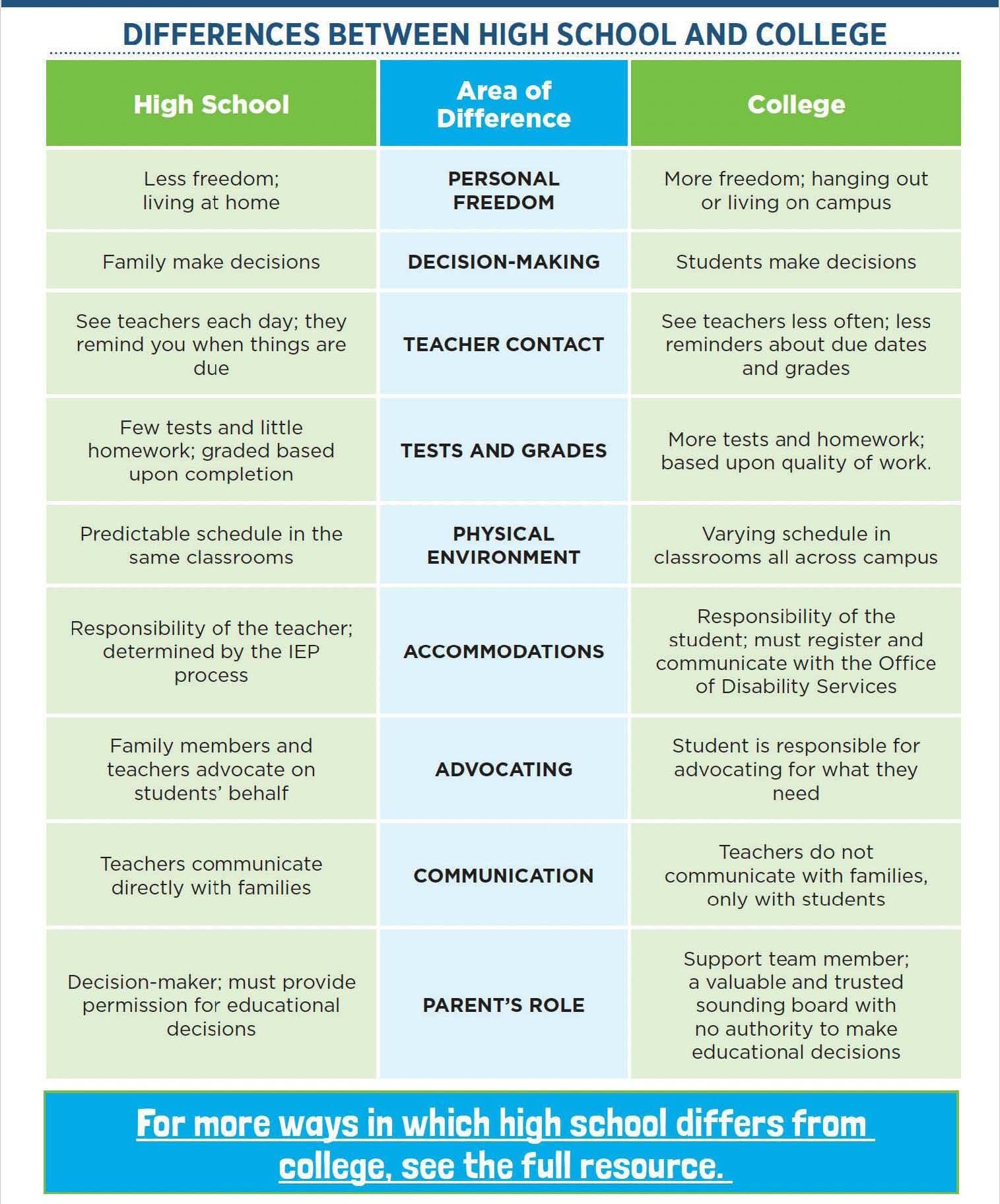
Understanding the critical differences between high school and college is essential, as these areas encompass personal freedom, decision-making, physical environment, testing, grades, communication, advocating, teacher contact, and the role of the parent. The following chart highlights the differences in these areas:
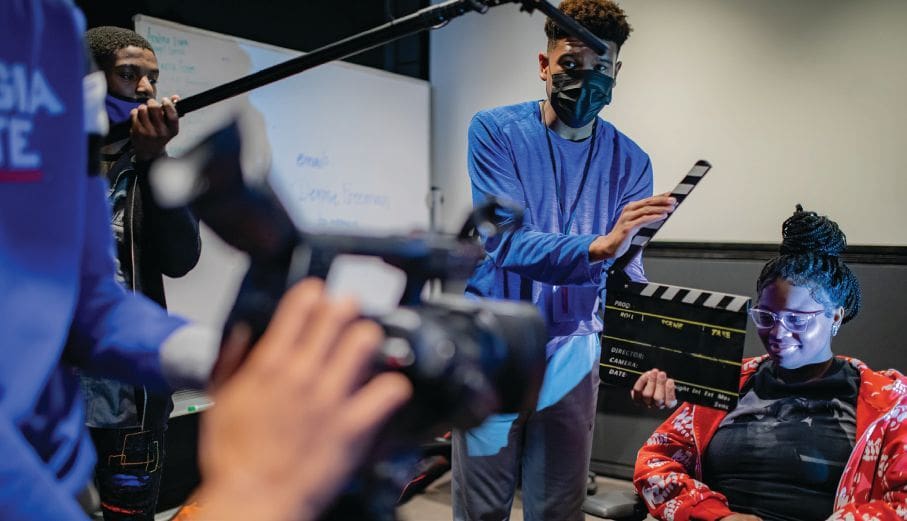
Preparing your child for college can and should begin as early as possible. Embracing a mindset of possibilities in your child’s early years will help you recognize their potential and interests.
Here are the four steps to help your child prepare and expand their opportunities;

#1: The Early Years: Embrace the Possibilities and Imagine Your “Future” College Student
- Think about who and how your child will need to be to benefit from inclusive higher education. Let those thoughts guide your parenting.
- Immerse your child in family, school, and community activities to help them gain real-world experience while teaching them independence and responsibility.
- Recognize your ever-changing role as you move from nurturer and protector to encourager and motivator as your child embarks on a learning, discovery, and risk-taking journey and progresses to independence to the greatest degree possible.
- Let your child learn by taking chances and making mistakes. They learn and grow by making decisions and having a say in their activities.
#2: Middle and High School: Starting the Transition Process
- Ask your child what they desire from their college experience. Discuss their interests and the classes they would like to take.
- Tips for Parents to Help Students with Intellectual Disabilities Think About College
- Work with your child’s IEP team of educators, therapists, and vocational rehab counselors to incorporate goals related to college – keeping the dream alive.
- 20 Powerful Strategies to Prepare for Inclusive Postsecondary Education


#3: Beginning or Latter Years of High School: Find the Right College
- Read the Student & Self- Advocate’s Guide to Choosing a Post-Secondary Program: Charting Your Course Through A New Landscape
This step-by-step document is written for students with intellectual/developmental disabilities and is an excellent resource.
- Learn About Conducting a College Search

This detailed guide outlines questions and answers to consider when choosing the right college program. Its interactive database features essential categories, including admissions, fees, tuition and financial aid, academics, housing, and more.

#4: Keep a Positive Mindset: Know That Your Child Will Be In the Perfect College at the Perfect Time
- Parenting is about trusting that everything will work out in time for your child, and planning for college is no different.
- Remember that help is available – you do not have to do this alone. Create a team of interested teachers, guidance and vocational rehab counselors, therapists, other parents, and anyone interested in helping your child succeed.
- Read these 10 Tips to Help Prepare Your Child for College. This guide, written by two inclusive post-secondary program professors, will answer the question: “What can we do to increase the chance our child will be admitted?”

As you can see, many options are available to help young people transition from high school to higher education and into the workforce.
Additional resources and helpful articles below will help you as you navigate your child’s future for success.

 [1]
[1]
Helpful Articles
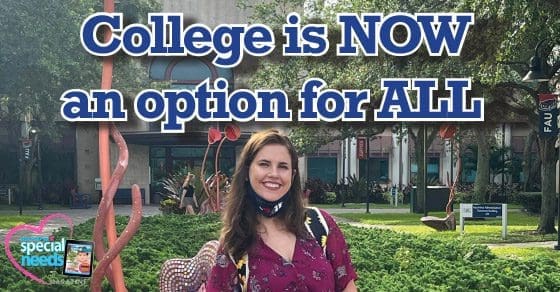
- College is Now an Option for All: Preparing and Expanding Opportunities for Students with ID Go to College! [2]
- College: A Choice for Everyone [3]
- Meet Nicholas McGee [4]
- Where to Go if Your Child Needs a Job or Help with Post High School Education [5]
- What Do I Do with My Child Once They Graduate High School? [6]
- College Programs: Closer Than You Think [7]
- College Bound: A Journey to Independence [8]
- Helping Your Child Be An Independent College Student [9]
- Parents of teenagers with special needs: Prep for college NOW…..3 tips [10]
This post originally appeared on our September/October 2024 Magazine [11]