
Through stories from parents and professionals, writer Erin Croyle explores “the fine art of reframing,” offering gentle, practical ways to rediscover calm, gratitude, and contentment this season.
There will always be adversity in our lives.
Being happy all the time is not only impossible, it’s unnatural.
Contentment is the sweet spot.
Reframing doesn’t erase hard moments — it helps us move through them
with more compassion and perspective.
When Life Feels Heavy
When the going gets tough, it’s not uncommon to slip into the mindset that we’re having a bad day, bad week, bad month, or even a bad year. For many of us, hardships are getting so much harder and more frequent that our inner beasts of negativity have a seemingly endless supply to feed on. And the holidays often magnify the melancholy in our lives.
A Therapist’s Simple Wisdom
Feelings of sadness and stress are inevitable. Years ago, when lamenting over my state of chronic overwhelm with my therapist at the time, she shared something that transformed my perspective: There will always be adversity in our lives. Being happy all the time is not only impossible, it’s unnatural. Contentment is the sweet spot.
Pause Before You Spiral
She taught me to stop trying to push away the things that are causing angst, pain, frustration, turmoil, etc. Acknowledge the pain points. Feel the discomfort. Process whatever is happening but resist the urge to spiral. A difficult moment doesn’t have to become a bad morning. A rough morning doesn’t equate to an awful day, and so on.
Learning to Reframe
In the years since, as the trials and tribulations of being a middle-aged, sandwich-generational mother of three neurodivergent children with complex needs feel like too much to process, it’s become clear that the only way out is through—the fine art of reframing
Seeing Through New Lenses
When you reframe your thinking, you look at a situation, relationship, or person through a different lens. Nothing is black and white—it’s all grey. And hopefully, every now and then there’s a rainbow.
Little Wins and Gentle Grace
“In general, I like to look at difficult situations as a challenge to get through. This helps me frame it to keep pushing through,” Jackie Robinson Brock, Infant Mental Health Mentor and Program Specialist at Virginia Commonwealth University’s Partnership for People with Disabilities (PPD) shared. “I try to focus on little wins, being intentional to be gentle with myself. I try to get extra time outside and work on a project where I can complete it and see my outcome.”
Write It Out, Walk It Off
Irene Schmalz serves as a liaison to the Deaf/Hard of Hearing at the PPD’s Center for Family Involvement. She finds long walks with her dog help when things aren’t going well. “If I lose sleep at night because of a racing mind, I will get up and write my feelings in my book. It is my safe place to say how I feel. I usually feel better afterwards,” she says.
 [1]
[1]
Model the Calm
Nickie Brandenburger also finds writing and getting outdoors cathartic. The mother of two and Co-Director of the Center for Family Involvement finds herself serving as the emotional regulator in a house full of neurodiversity. “When I see tensions are high due to sensory overload, I get very intentional about my tone of voice, body language, and the volume of my voice… After some time has passed and they are calm we always recalibrate by having a one-to-one conversation… You can’t stop the waves but you can teach (your children) how to surf.”
“As a parent, it’s essential to model the behavior you want your children to exhibit,” Phyllis Haynes, PhD, Co-Director and Program Specialist at the PPD shared. “Model the calm you hope to see, remembering that not every action or comment REQUIRES a response.”
 [2]
[2]
Laughter Keeps Us Grounded
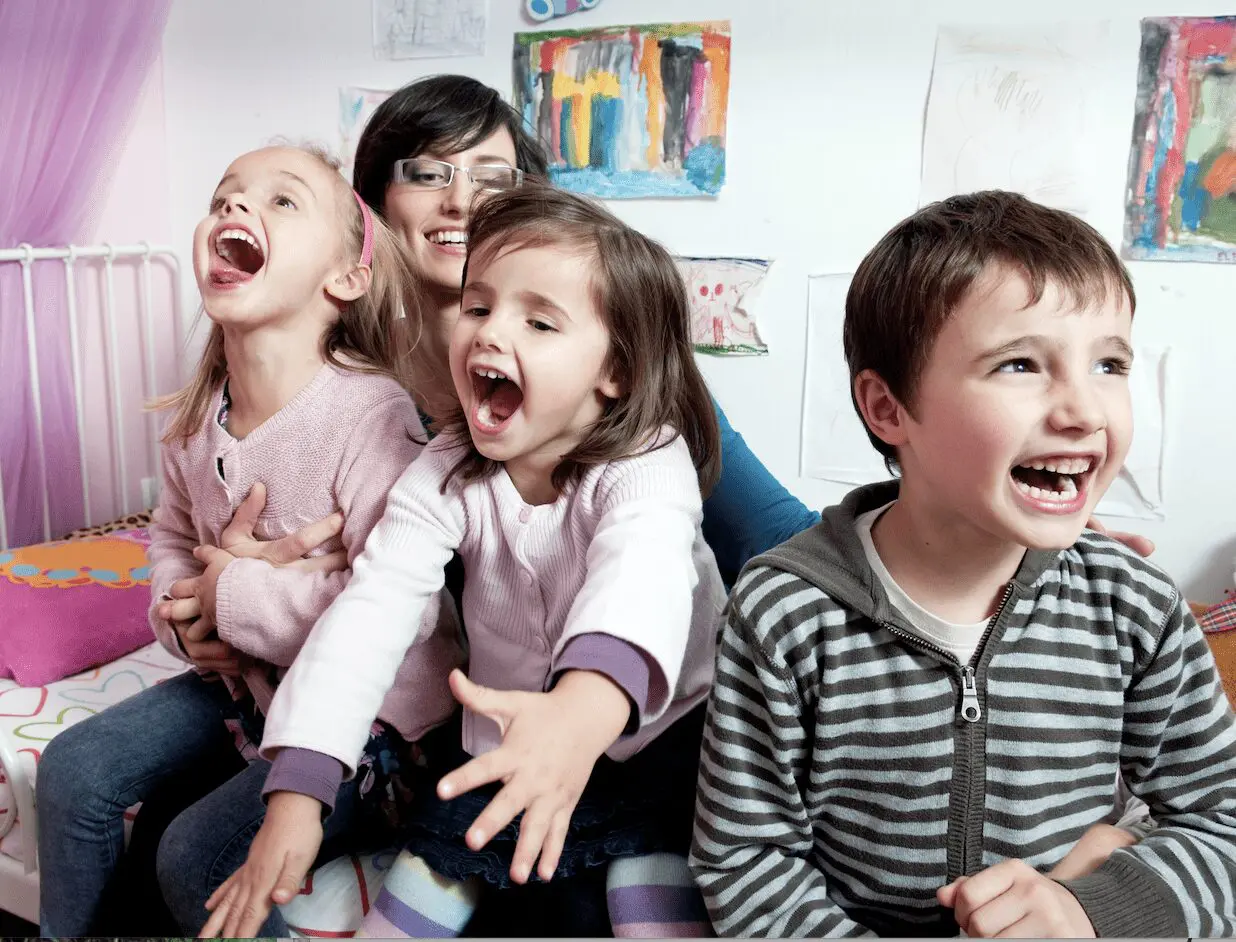
Another mother who asked to remain anonymous finds humor is key in staying positive in her mostly autistic family. “The everyday things that frustrate us, we try to laugh it off.” Like so many families, money is tight and she’s trying to help her children understand how to budget.
One way they’re saving is family movie nights at home. They find a movie to stream then gather “homemade popcorn, snacks, and a drink. (The kids) see how much we can save by staying home. My children learned they can get a whole box of ice cream bars cheaper than one dessert at a restaurant. Sometimes this works against me because they sneak a box in their shopping cart then try to tell me it’s cheaper than if they ordered dessert. I mean—they’re not wrong!”
Making Space for Connection
Robinson-Brock helps her loved ones through hard times by taking extra time to do something special with them. She says, “I also make extra space during the bedtime routine at night because that’s when deep conversations happen. I remind my child that we are on a team and can brainstorm solutions, and when there are no solutions, when things are just hard, I’m here for them.”
Appreciating Small Joys
When I asked one mom of two “very, very demanding but very, very differently challenged kids,” one who requires total care, how she reframed things, she threw the question back at me and said, “I don’t think I’m good at (reframing). I get by by compartmentalizing things. When I’m away from the horrible stress of the trenches, I try to enjoy what I am doing without thinking about what I have to go back to or what the future holds. And I think a lot of the time I pretend to be OK, otherwise I’d crumble. Certainly, around other people we all pretend to be OK, right? Sometimes I fool myself for a bit. I do try to be appreciative of what the good things are in my life.”
Finding Joy in Small Moments
That appreciation of the most basic things in the darkest of times is what reframing is all about. Laughter, freshly fallen snow, that first sip of coffee on a quiet morning, a favorite song, when my children sign “I love you” from across a crowded room, a warm fire, hot cocoa, a cozy couch, watching the sunrise, a sunset stroll, or the gift of just being able to spend time together.
 [3]
[3]