Teaching Body Boundaries & Safety Before Summer: What Every Parent Needs to Know
Summer brings a sense of freedom–longer days, new activities, and more independence for our kids.
But with that freedom also comes something parents don’t always talk about: more exposure to people, environments, and situations where boundaries matter.
Whether your child is attending camp, spending time with extended family, or simply out more in the community, this is a good time to begin building the skills that help keep them safe
What “Body Safety” Really Means
Body safety isn’t about fear. It’s about understanding, communication, and confidence.
For many children with special needs, these skills need to be taught directly, practiced often, and reinforced in simple, consistent ways.
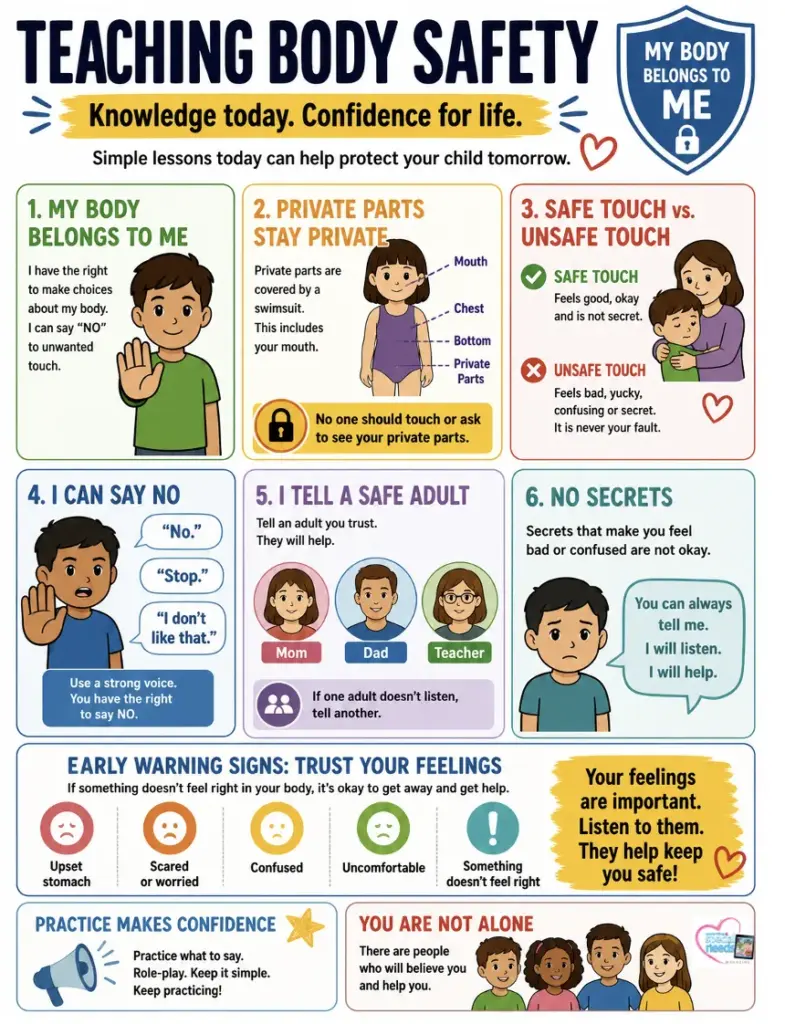
At its core, body safety means helping your child understand:
- Their body belongs to them
- Some parts of the body are private
- They can say “no” to unwanted touch
- There are safe adults they can go to
- They can talk to you about anything
This is not a one-time conversation. It’s something that grows over time.
5 Body Safety Skills to Teach Before Summer
You don’t have to teach everything at once. Start with one concept and build from there.
1. Understanding Private Body Parts
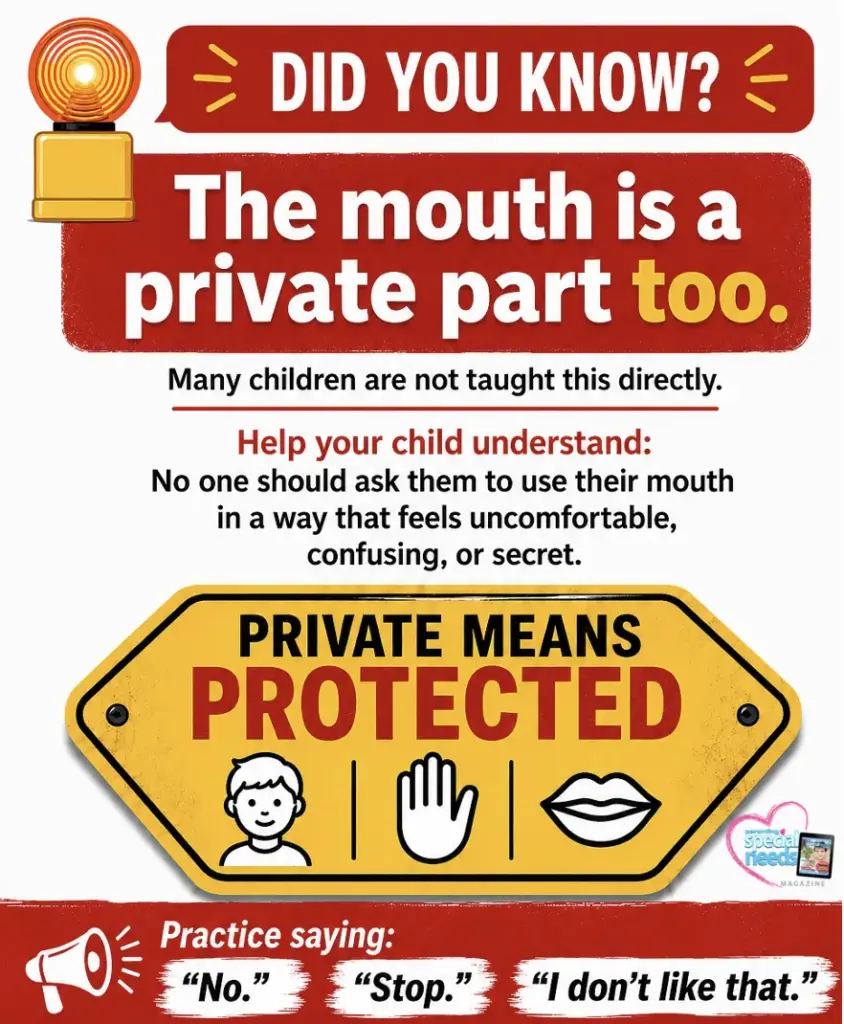
Use clear, simple language. Explain that some parts of the body are private and are not for others to touch or see, except in specific situations like medical care with a trusted adult present. Keep this information simple and consistent.
2. Safe vs. Unsafe Touch
Help your child learn the difference between safe touch that is helpful and appropriate and unsafe touch that is confusing or secretive. Many children need examples and repetition to really understand this.
3. Saying “No” (and Meaning It)
This can be one of the hardest and most important skills.
Practice simple phrases:
“No.”
“Stop.”
“I don’t like that.”
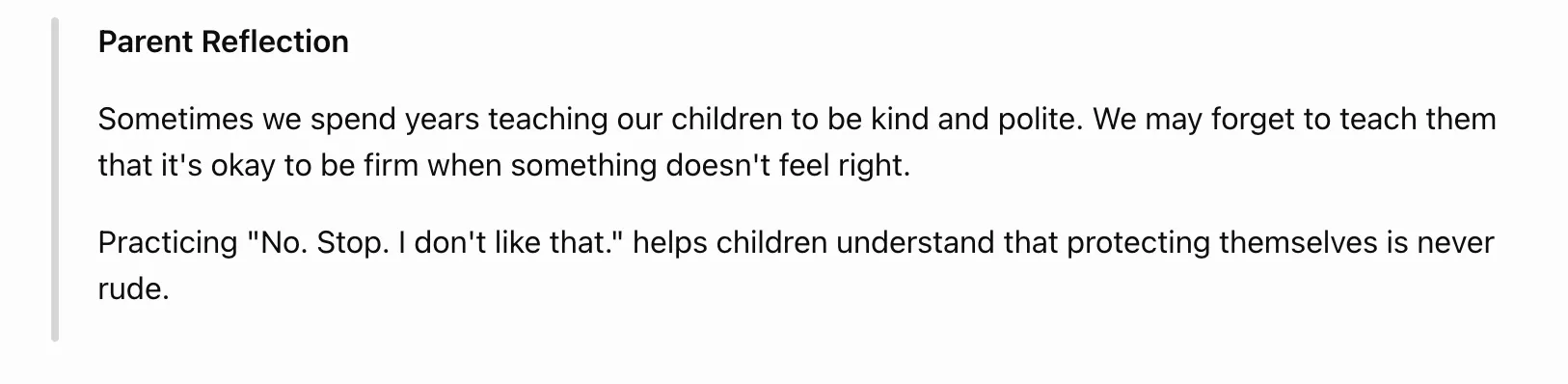
Let them practice using a strong voice. Let them see that their voice matters.
4. Identifying Trusted Adults
Help your child clearly understand who the safe adults are, and be specific. Name them, and repeat those names. Remind your child that if one adult doesn’t listen, they can tell another.
5. Speaking Up Without Fear
Children need to know they can tell you anything without getting in trouble. That can be something uncomfortable or confusing or something they were told to keep secret. Remind them often: You can always tell me. I will listen.
Start Small. Practice Often
Start this week and choose one concept from the list above. Practice for five minutes a day using simple role play and repeating the same words each time.
If you’re not sure where to begin, start here:
Practice saying “No”
Talk about private body parts
Name two or three trusted adults
Whatever you do, keep your practice calm and simple. That’s how learning sticks.
Where Parents Often Get Stuck
Many parents feel unsure about how to start. You might wonder if you’re saying too much or not enough. You might worry about scaring or confusing your child. These feelings are normal.
For many children, the challenge isn’t fear; it’s not having clear, direct instruction. Without instruction, children may not recognize unsafe situations, know how to respond, or realize they should tell someone.
What If Something Feels Off?
Trust your instincts.
If something doesn’t feel right:
- Stay calm
- Listen without interrupting
- Avoid leading questions
- Reassure your child they did the right thing by telling you
Then take the next step, whether that’s reaching out to a professional, a school contact, or another trusted support. You don’t have to figure it out alone.
Building Confidence, One Step at a Time
These skills don’t happen overnight. They are built through repetition, simple language, and safe conversations. Most importantly, your child learns they will be heard and protected.
You don’t have to cover everything before summer begins. Every small step you take, every conversation, and every practice moment is helping your child build awareness, confidence, and safety. That matters more than doing it perfectly.
The guidance in this article reflects recommendations shared by Parenting Special Needs contributors, educators, therapists, and child safety advocates who have supported families over the years