
Simple, science-backed habits can support brain health for families — helping both parents and children learn, regulate emotions, and thrive in everyday life without complicated programs or tools.
Brain health isn’t about perfection or raising a “genius.” It’s about helping our brains work their best so we can learn, adapt, manage our feelings, and connect with the world around us.
For families raising children with special needs, brain health matters even more. The spaces we create, the routines we build, and the support we give can boost learning, confidence, and resilience over time.
The good news? You don’t need complicated programs or expensive tools. Small, steady habits can truly help.
And just as importantly, these habits support your brain, too. When parents take steps to care for themselves — like managing sleep, movement, and routines — they model resilience for their children and strengthen the whole family’s well-being.
 [1]
[1]
What Does “Brain Health” Really Mean?
Brain health is about how well the brain supports thinking, memory, emotions, communication, movement, and behavior. It’s not about having no challenges—it’s about helping everyone reach their best possible quality of life.
One important idea is neuroplasticity [2]—the brain’s ability to change and grow at any age. Every new experience, routine, or skill practiced helps shape the brain’s connections. Progress is always possible, no matter your child’s age or ability.
Why Brain Health Matters for Families
Strong brain health supports:
-
Learning and problem-solving
-
Emotional regulation
-
Attention and focus
-
Communication and social skills
-
Stress management for both parents and children
Brain health isn’t something you “fix.” It’s something you gently build over time.
1. Sleep Is Non-Negotiable
Sleep plays a critical role in memory, emotional regulation, and brain development. When children and adults don’t get enough rest, attention, mood, and behavior often suffer.
Consistent, high-quality sleep supports:
-
Learning and memory
-
Emotional control
-
Cognitive flexibility
-
Stress recovery
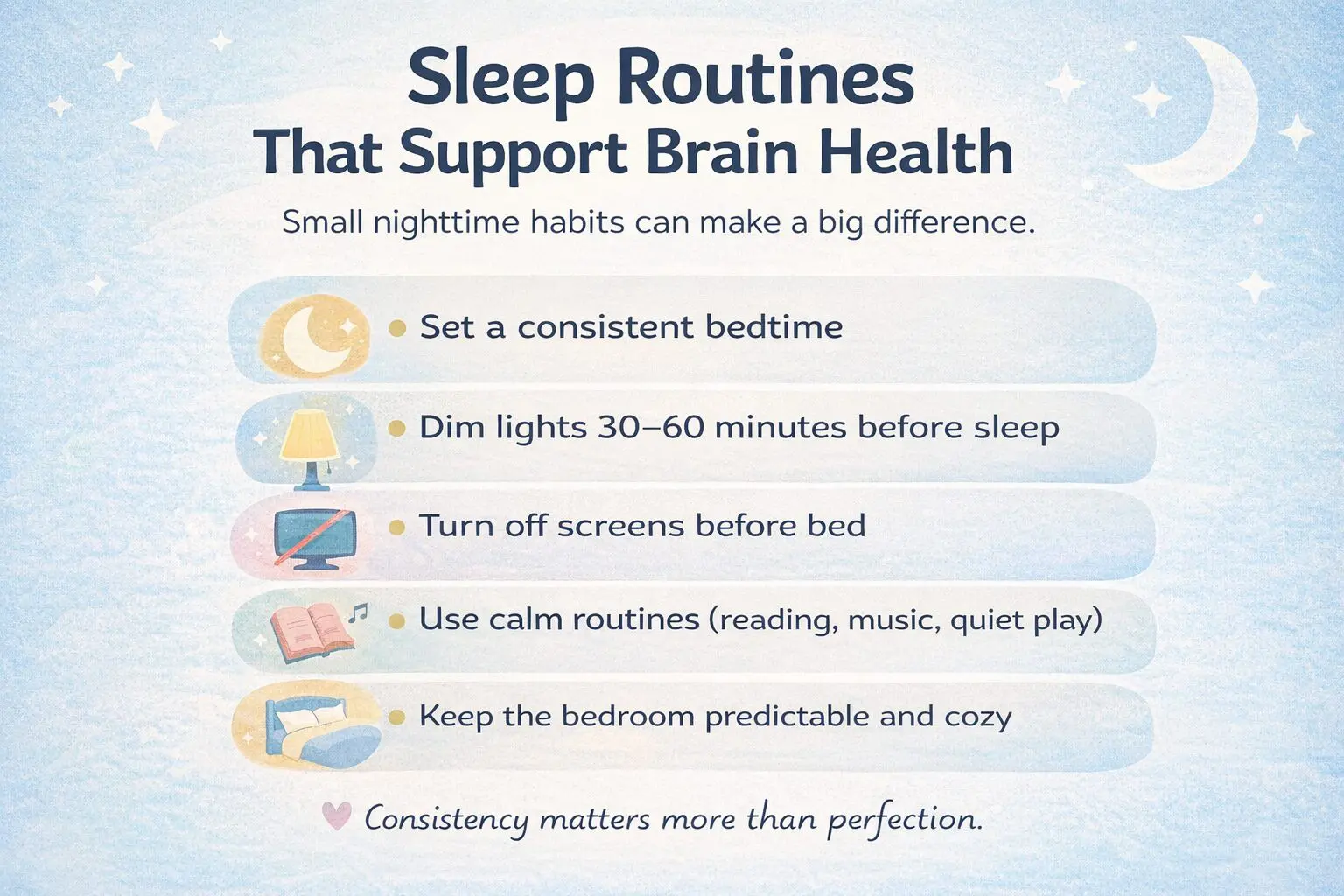
Simple ways to support better sleep:
-
Keep a consistent bedtime and wake-up time
-
Dim lights 30–60 minutes before bed
-
Turn off screens before bedtime
-
Use calming routines like reading, music, or quiet play
-
Make the bedroom predictable and sensory-friendly
 [3]
[3]
2. Move Every Day
Movement fuels the brain. Physical activity increases blood flow, supports emotional regulation, and strengthens neural connections.
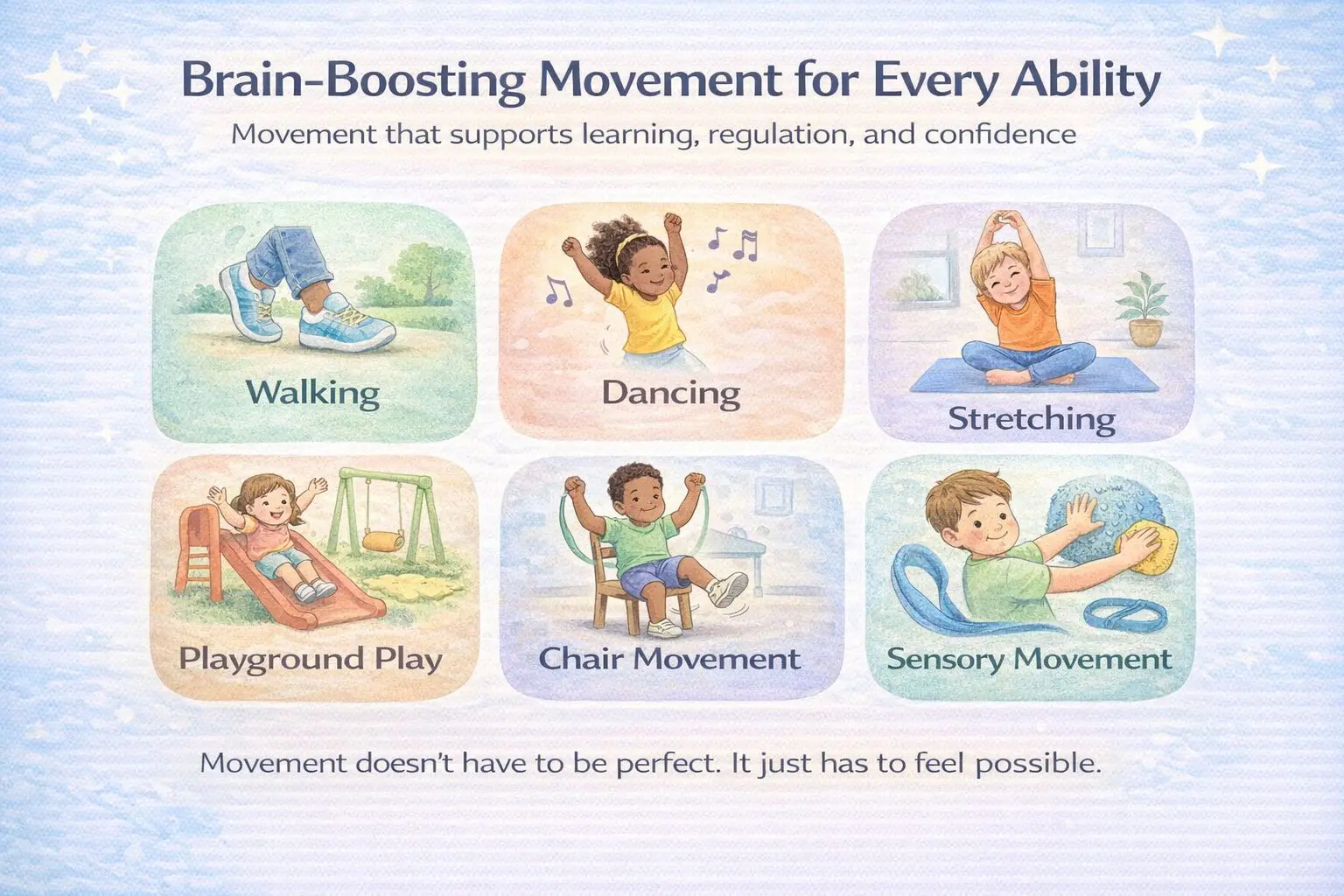
Movement doesn’t have to mean sports or structured exercise. It can be:
- Walking
- Dancing
- Stretching
- Playground play
- Chair movement
- Sensory movement activities
For children with physical, sensory, or cognitive differences, movement should be adapted to what feels safe and enjoyable. The goal is engagement, not perfection.
 [4]
[4]
3. Mindful Screen Use
Screens are part of modern life, but how we use them matters. Too much screen time, or using screens without a plan, can get in the way of sleep, movement, and time together.
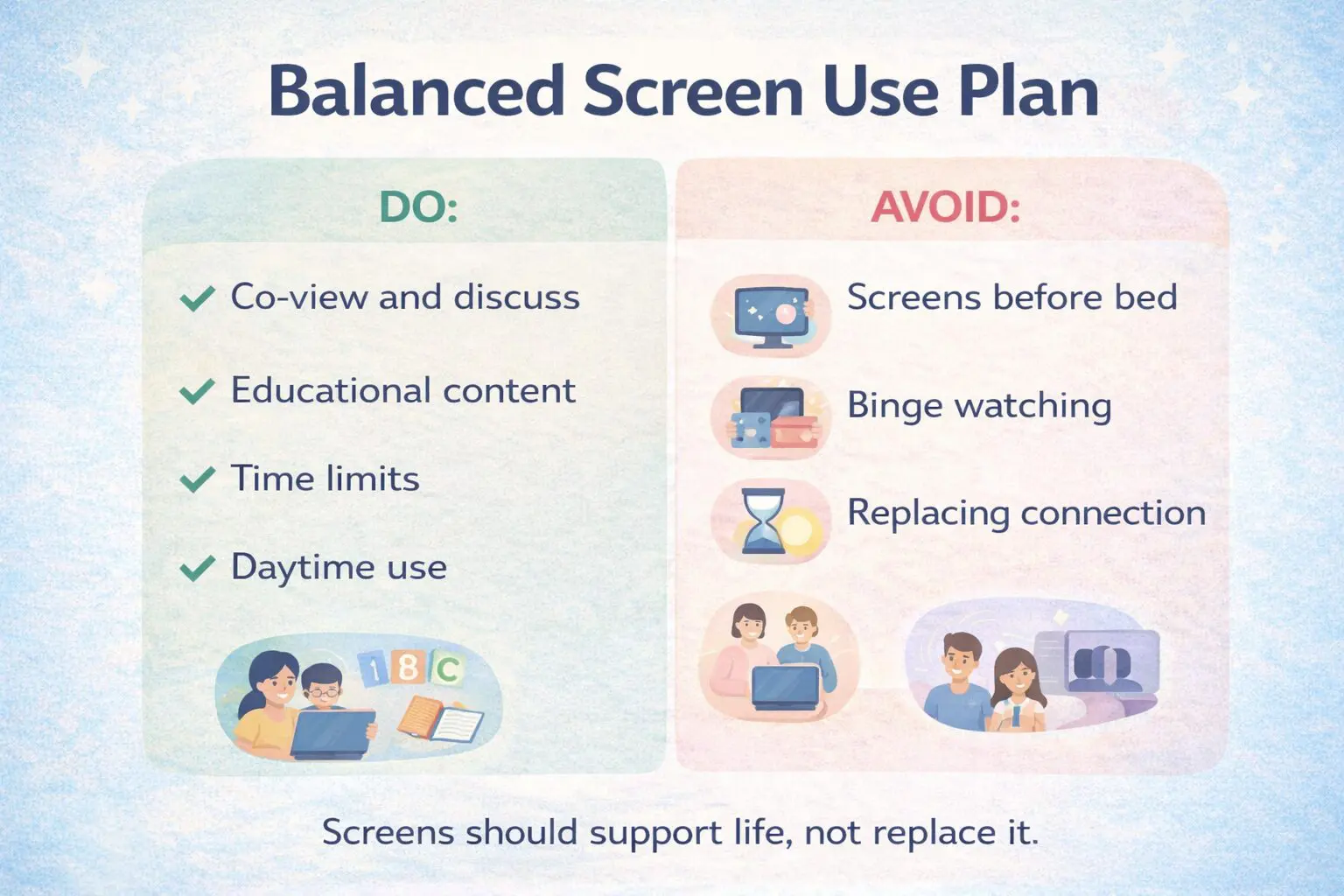
Healthy screen habits include:
- Co-viewing and discussing content together
- Choosing interactive or educational programs
- Setting clear time limits
- Avoiding screens close to bedtime
- Making room for screen-free family connection
Screens should support life, not replace real connections.
 [5]
[5]
4. Nutrition Feeds the Brain
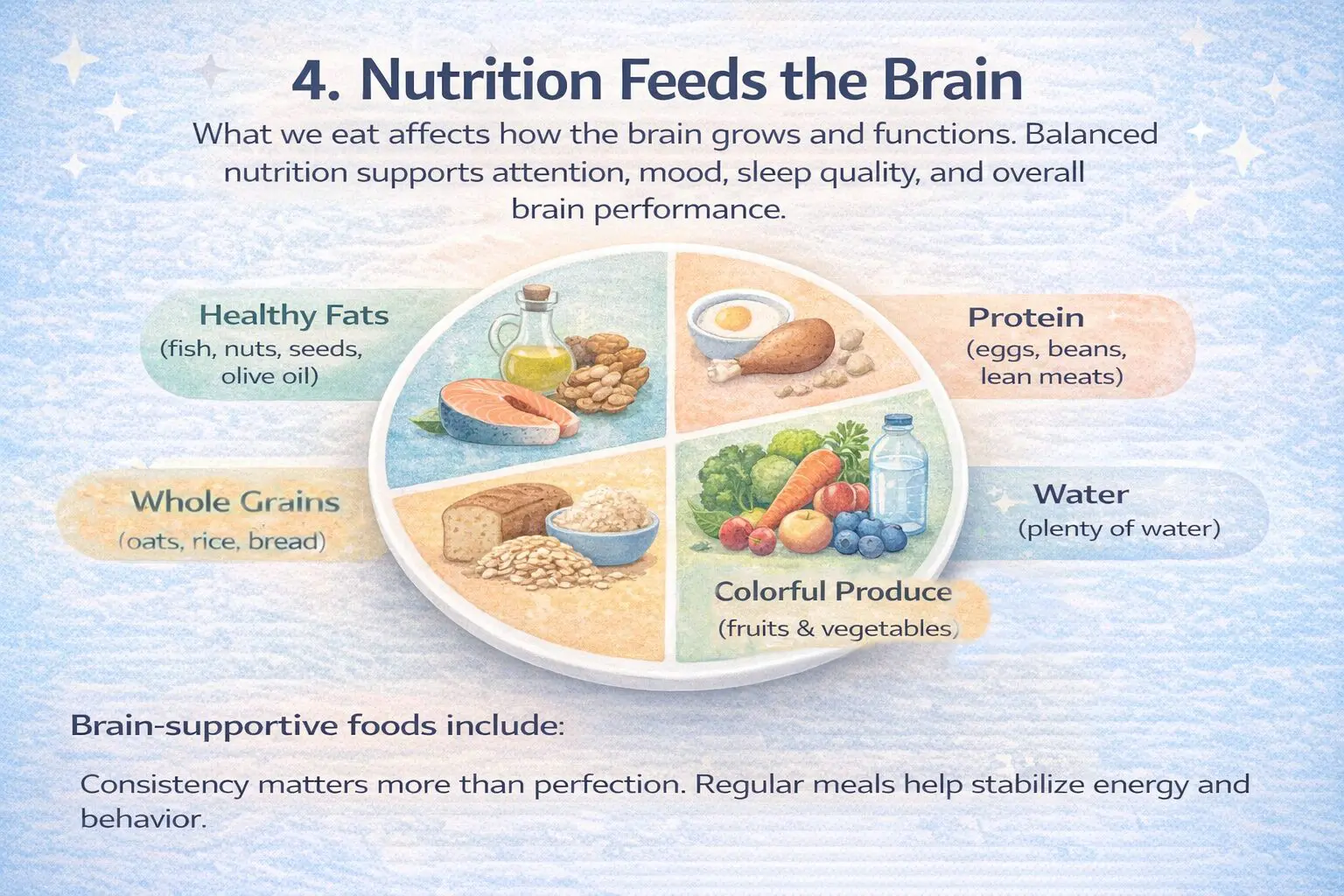
What we eat affects how the brain grows and functions. Balanced nutrition supports attention, mood, sleep quality, and overall brain performance.
Brain-supportive foods include:
- Healthy fats (fish, nuts, seeds, olive oil)
- Protein (eggs, beans, lean meats)
- Colorful fruits and vegetables
- Whole grains
- Plenty of water
Consistency matters more than perfection. Regular meals help stabilize energy and behavior.
 [6]
[6]
5. Routine and Stress Regulation
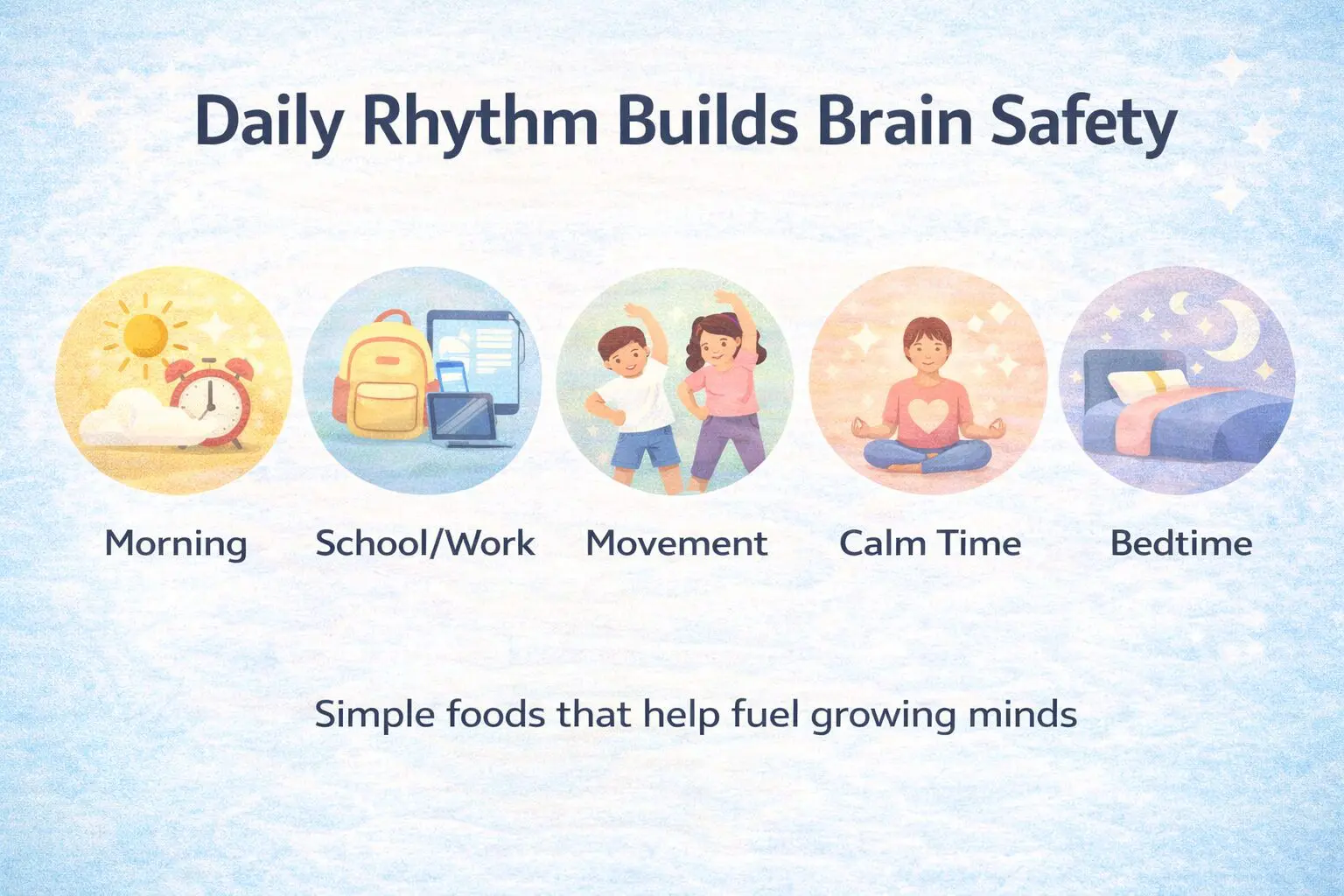
Predictable routines help the brain feel safe. When children know what comes next, their nervous systems can focus on learning rather than on survival.
Helpful supports include:
- Visual schedules
- Consistent morning and bedtime routines
- Calm spaces for regulation
- Clear transitions
For parents, managing stress is just as important. Kids learn how to handle their own feelings by watching us.
Even small acts of self-care support brain health:
- Deep breathing
- Short walks
- Quiet moments
- Asking for support
 [7]
[7]
Brain Health Across Development
Early Childhood
- Play, movement, and interaction build neural pathways
- Face-to-face connection matters most
School Age
- Balance homework with movement and play
- Protect sleep
Teen Years
- Sleep, nutrition, and emotional safety are essential
- Support independence with structure
Special Needs Family Focus
Every child’s brain develops in its own way. Support should be flexible and respectful.
Helpful adaptations:
- Sensory seekers: movement with deep pressure or resistance
- Sensory avoiders: predictable low-stimulus environments
- Executive function differences: visual planners and timers
- Communication differences: clear routines and visual supports
There’s no “one right way.” There’s only what works for your family.
Daily Takeaways
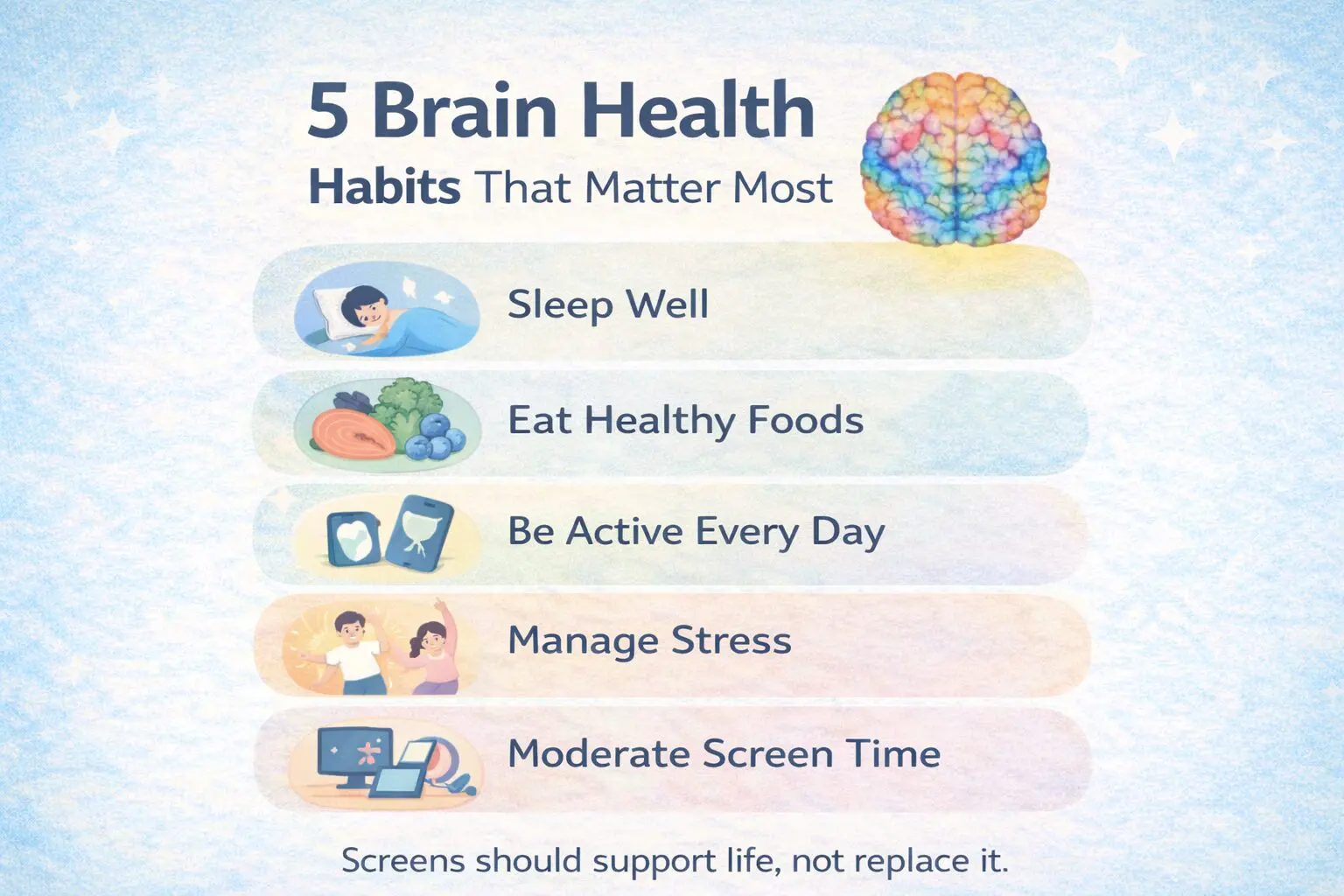
You don’t need to do everything. Just focus on what feels manageable:
- ✔ Prioritize sleep
- ✔ Encourage daily movement
- ✔ Use screens intentionally
- ✔ Support nutrition with consistency
- ✔ Build predictable routines
 [8]
[8]
Care for your child. Care for yourself. Together.
Want to Go Deeper?
This article focuses on simple, everyday ways to support brain health at home. If you’d like to explore the science and medical foundations behind brain health in more detail, we invite you to read our original article:
How to Promote Better Brain Health for Your Child [9]
By Lori Mauer
Sources & Further Reading
This article is for educational purposes and is not a substitute for medical or professional advice.
Research and guidance referenced include:
- World Health Organization – Brain Health
https://www.who.int/health-topics/brain-health [10] - Mayo Clinic – Neuroplasticity
https://mcpress.mayoclinic.org/healthy-aging/the-power-of-neuroplasticity-how-your-brain-adapts-and-grows-as-you-age/ [11] - Lurie Children’s Hospital – Sleep and Brain Development
https://www.luriechildrens.org/en/blog/recognizing-and-supporting-healthy-brain-development-in-children/ [12] - Harvard Center on the Developing Child – Routines, Relationships & Brain Development
https://developingchild.harvard.edu [13] - BrainFacts.org – Physical Activity, Sleep, Nutrition & Brain Health
https://www.brainfacts.org [14] - National Library of Medicine (NIH) – Screen Time and Child Development
https://pmc.ncbi.nlm.nih.gov [15] - Cedars-Sinai – Screen Time and Developing Brains
https://www.cedars-sinai.org/newsroom/back-to-school-how-screen-time-affects-childrens-developing-brains/ [16] - National Library of Medicine (NIH) – Nutrition, Gut-Brain & Development
https://pmc.ncbi.nlm.nih.gov [15]